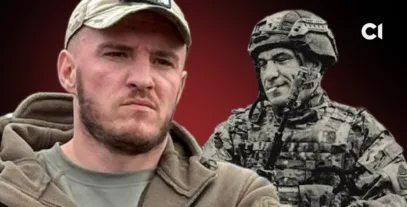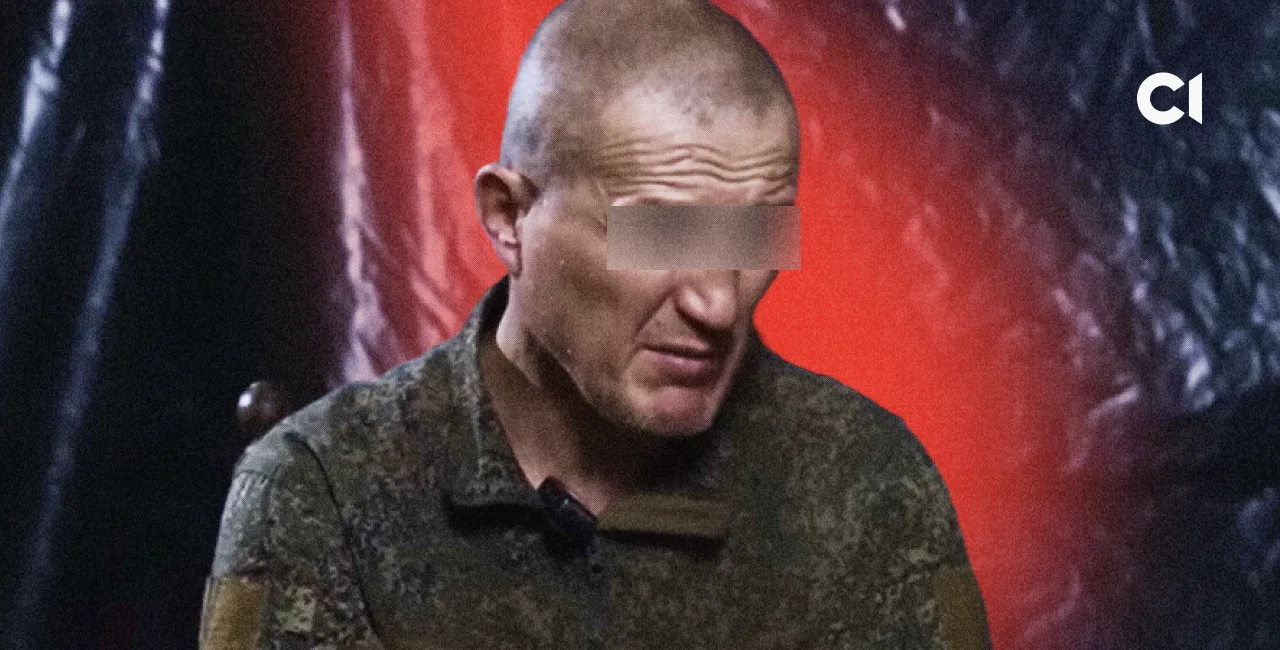
Serhii Karpilovych, callsign “Karp,” is 51 years old. He spent three decades in prisons and penal colonies across Russia before arriving in the Donetsk region as part of the occupying forces in 2025. He was captured on 9 December in the village of Zolotyi Kolodiaz, Pokrovsk district. On the penultimate, twentieth day of a clearing operation, Azov troops captured 18 Russian soldiers. “This is a somewhat unique case,” one Azov serviceman says, referring to the unusually large number of prisoners taken.
But several months later, it would become clear that this was not the only thing that made the case unusual. Karpilovych is the only detained Russian serviceman currently accused of sexual violence. According to investigators, he raped a civilian woman repeatedly over the course of two months. He is now standing trial in a Ukrainian court.
Slidstvo.Info is telling this story for the first time.
“F*ck, with kindness, with soul”
In two hours, dinner will be served at Dnipro Pre-Trial Detention Centre No. 4: wheat porridge and fried fish. For now, Serhii Karpilovych is sitting in the office of the officer in charge of the detention block and wants a sweet bun: he misses sugary food. There are two buns; his lawyer opens one of the packets, but Karpilovych has no claim to the other.
— That’s not mine, — he says modestly, and for a moment you could almost believe he is incapable of committing even the smallest offence.
Yet Karpilovych says he first went to prison at 18, for robbery. What followed was monotonous: he got out, robbed someone, went back to prison — the same cycle for thirty years. His most recent sentence, four years behind bars, came in May 2022 after he drunkenly stole 22,000 roubles (12,000 hryvnias/268 USD) from neighbours at his hostel. Incidentally, he shared his room there with a woman — presumably his common-law wife. In conversation, however, he insists that he never had a family.
He was due to be released in the spring of 2026, but got out a year early after signing a contract with the Russian military in June 2025. Karpilovych is convinced that otherwise he would have remained behind bars for another decade. He says this was because drugs were being smuggled through the penal colony using him as an intermediary, and one of the inmates died of an overdose. He insists that he never used drugs himself and never had problems with drugs or alcohol because, as he puts it, “everything should be in moderation.”
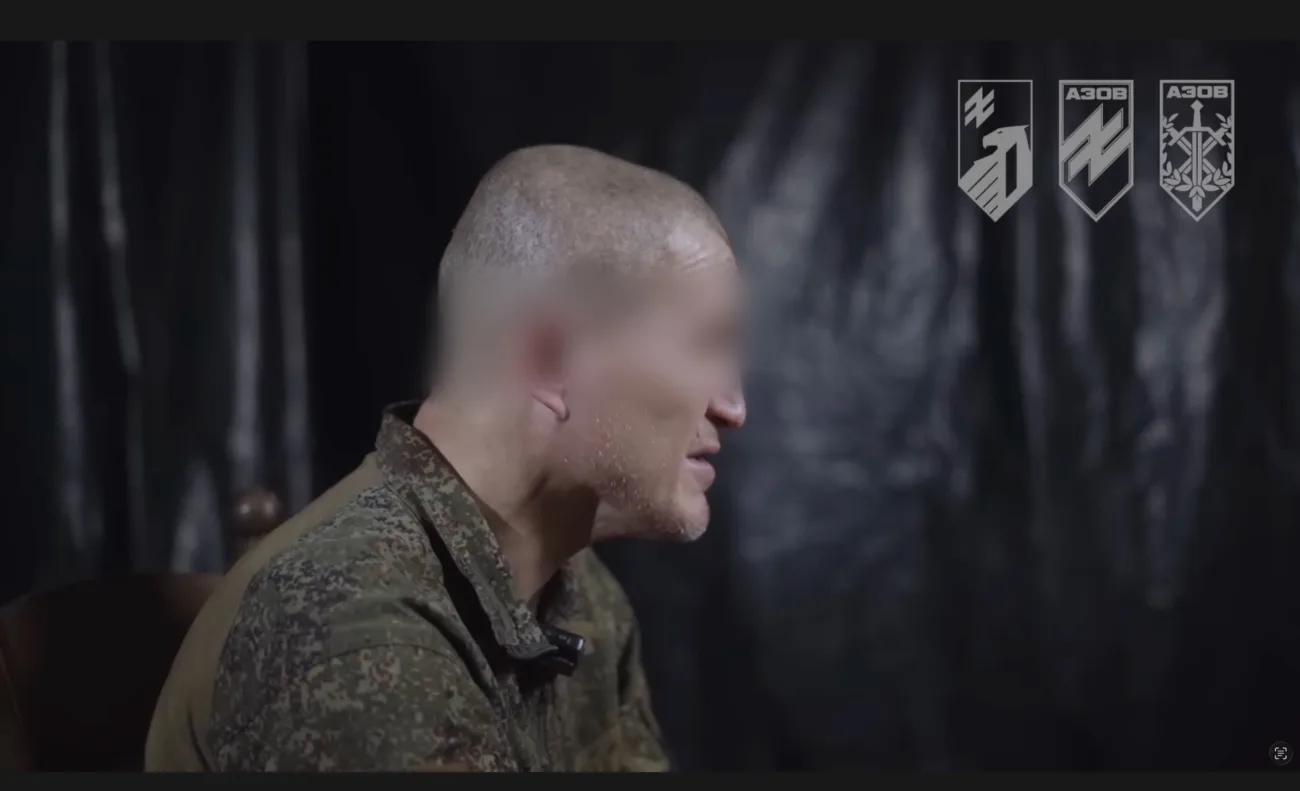
Karpilovych therefore agreed to be recruited without being given any choice over his unit or position. He became a rifleman in the Russian Armed Forces’ 114th Separate Motor Rifle Brigade. He says he was supposed to earn 230,000 roubles a month (126,000 hryvnias/2800 USD), with a one-off payment of 3 million roubles (1.65 million hryvnias/36,800 USD) upon signing the contract. He planned to use the money to buy a Mazda and an apartment in Sochi. He was not afraid of being killed in the war because, he says, he “didn’t think about it” and therefore did not “invite” death upon himself.
Karpilovych claims not to know who exactly recruited him and does not want to discuss it. In fact, for the first ten minutes or so, he refuses to talk at all. He says “it’s all bullshit” — that no crime ever took place.
— There was a woman there. She just looked after me after I was wounded, stayed by my side.
The “woman” is Kateryna (name changed), a local resident of the village of Zolotyi Kolodiaz, which the Russian soldier had been sent to assault. And “by my side” means in a cellar beside one of the houses there. According to Karpilovych himself, his first assignment was to establish a position in the village in September 2025. Before that, he had undergone three months of training, which proved of little practical use in an actual war: once there, his commanders simply told him to go in, establish a position, and not surrender.
Karpilovych therefore agreed to be recruited without being given any choice over his unit or position. He became a rifleman in the Russian Armed Forces’ 114th Separate Motor Rifle Brigade. He says he was supposed to earn 230,000 roubles a month (126,000 hryvnias), with a one-off payment of 3 million roubles (1.65 million hryvnias) upon signing the contract. He planned to use the money to buy a Mazda and an apartment in Sochi. He was not afraid of being killed in the war because, he says, he “didn’t think about it” and therefore did not “invite” death upon himself.
Karpilovych claims not to know who exactly recruited him and does not want to discuss it. In fact, for the first ten minutes or so, he refuses to talk at all. He says “it’s all bullshit” — that no crime ever took place.
— There was a woman there. She just looked after me after I was wounded, stayed by my side.
The “woman” is Kateryna (name changed), a local resident of the village of Zolotyi Kolodiaz, which the Russian soldier had been sent to assault. And “by my side” means in a cellar beside one of the houses there. According to Karpilovych himself, his first assignment was to establish a position in the village in September 2025. Before that, he had undergone three months of training, which proved of little practical use in an actual war: once there, his commanders simply told him to go in, establish a position, and not surrender.
— They didn’t explain anything to us. They just sent us from one point to another. Just secure a position and wait. It never even crossed my mind to kill anyone. Just go in and come back out, nothing more.
Karpilovych says they were supposedly given no instructions on what to do with civilians, although they had been told about cases in which Ukrainian soldiers changed into civilian clothes. He refused to elaborate on this or on the order to kill civilians that investigators say they have established, responding instead with an indistinct mutter about “suspicious situations.”
Of the four men in his group, only two made it to Zolotyi Kolodiaz, where other Russian soldiers were already hiding in buildings. Karpilovych himself suffered wounds to his head and legs and crawled to a cellar. There were already three people inside: a Russian serviceman and two local residents, a man and a woman who were neighbours and had been living in the cellar since August.
— I was covered in blood. She changed me into civilian clothes, — the Russian soldier says of Kateryna.
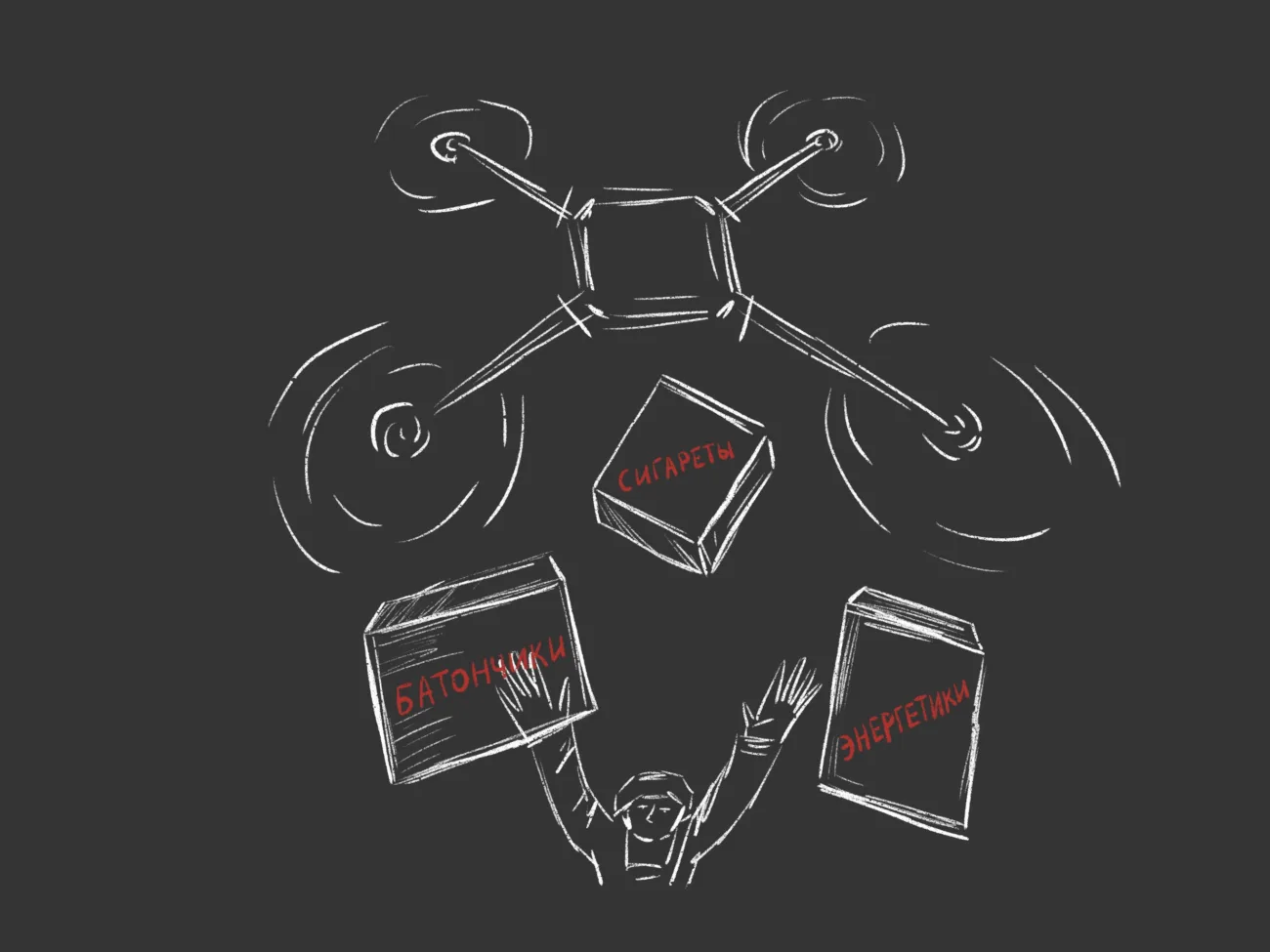
From that point on, Karpilovych says, he had no contact with anyone, and his fellow soldiers believed he was dead. Yet almost immediately he contradicts himself: at one point, he says, a drone dropped cigarettes and chocolate bars into the yard for him.
Meanwhile, he was recovering from his wounds. At the end of September, the local man who had been living in the cellar went outside and never returned — he was killed in shelling. It was then, in October, Karpilovych believes, that he and Kateryna “started a relationship.”
— I was laid up for three months. The girl looked after me — the woman — changed my bandages, treated my wounds with peroxide.
He insists that she was his lover and confirms that they had sex on multiple occasions. Karpilovych says the initiative was shared and mutual. If she had been against it, he argues, she could simply have left the cellar — in other words, gone out into the ruins under shellfire. And so he and Kateryna would remain alone when the other two Russian soldiers “went off to do their own thing.”
— Everyone understood what was going on, — he says. — Everyone treated each other… (normally — ed.), fuck.
The two Russian servicemen who were in the cellar are now witnesses in the case against Karpilovych.
According to the Russian soldier, Kateryna had also had a difficult life: her children were in an occupied city, and her husband had drunk himself into ruin. It was over these shared hardships, he says, that they bonded. He liked her:
— Well, generally, because of her… fuck, what do you call it?.. Fuck, her kindness, her soul, fuck, her humanity, the way she treated me. She didn’t abandon me. Not everyone is an animal, right? Though there are very few good people left these days.
Karpilovych adds that he even gave her roses he found in a garden and imagined a quiet family life together. This continued until 9 December 2025, when, as the Russian soldier puts it, they were “separated.”

A plea to the Sun God
Serhii Karpilovych says that everyone who had been in the cellar supposedly planned to meet again once the war was over and have a drink together. He wanted to start a family with Kateryna. For now, however, he is waiting to see her in court. In December 2025, criminal proceedings were opened against him over conflict-related sexual violence under Part 1 of Article 438 of Ukraine’s Criminal Code.
Karpilovych was notified that he was a suspect while at the camp. He says his reaction was “normal.” He is convinced that Kateryna will not testify against him in court:
— Well, that’s on her conscience. How could she say that? I don’t think she will. It won’t happen. I don’t even think about it.
Asked to describe what his “beloved woman” looks like, he gives a muddled answer:
— Well, she has this pointed nose, light-coloured hair… A good creature, a good figure.
He adds that while in the pre-trial detention centre, she is all he thinks about.
Karpilovych says he is treated well in his cell because he is not confrontational and does not allow anyone else to start conflicts either. They get along fine, he says, and read books. Karpilovych himself is reading The Strike of the Russian Gods, a Nazi book that calls for an uprising against Jews, whom it claims are actually “biorobots” created long ago by a “Satanic civilisation.” The author makes no secret of his support for Hitler and the idea of “Aryan superiority,” but Serhii chooses not to mention that. Instead, he says the book is about the “sun god.”
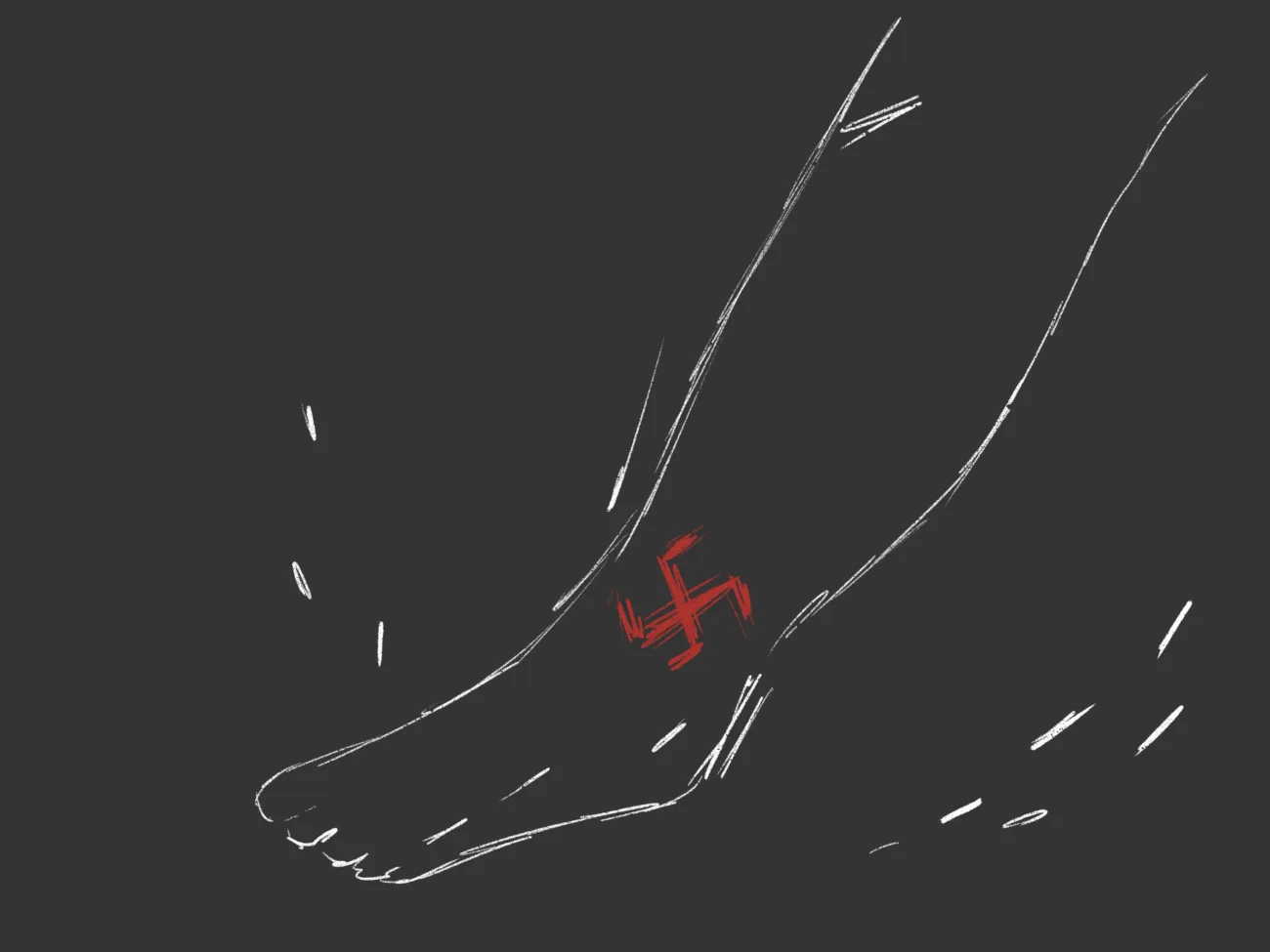
He then shows a small tattoo on his ankle: a swastika. He insists that it is a symbol of the sun and joy, and says that every Russian should practise martial arts for self-defence. He asks the “benevolent sun god” to help him recover and get out of the pre-trial detention centre.
Karpilovych is waiting for the Red Cross so that he can send a letter to Russia. He plans to write to a woman he refers to as an “acquaintance.” He would also like to call her. Reluctantly, he eventually explains that her name is Svitlana and that they worked together when he was serving another prison sentence, with Karpilovych employed as a laboratory assistant at the penal colony. The facility housed prisoners with serious illnesses, including Karpilovych, who had tuberculosis. He says Svitlana helped him, and that he has already sent her half a million roubles from the combat pay he received on his bank card. Now he wants to get back in touch with her.
At the end of the interview, Karpilovych’s lawyer, Oleksandr Zibrov, says:
— So he’s just told you that, as it turns out, there is another woman back there — who else would he send half a million roubles to? I didn’t know about that.
Leave no civilians alive
Zibrov says he does not know for certain whether Karpilovych himself told SBU officers about his “relationship” with Kateryna. According to the Russian soldier’s version of events, that was what led to the case against him — he claims that the woman herself never filed a complaint.
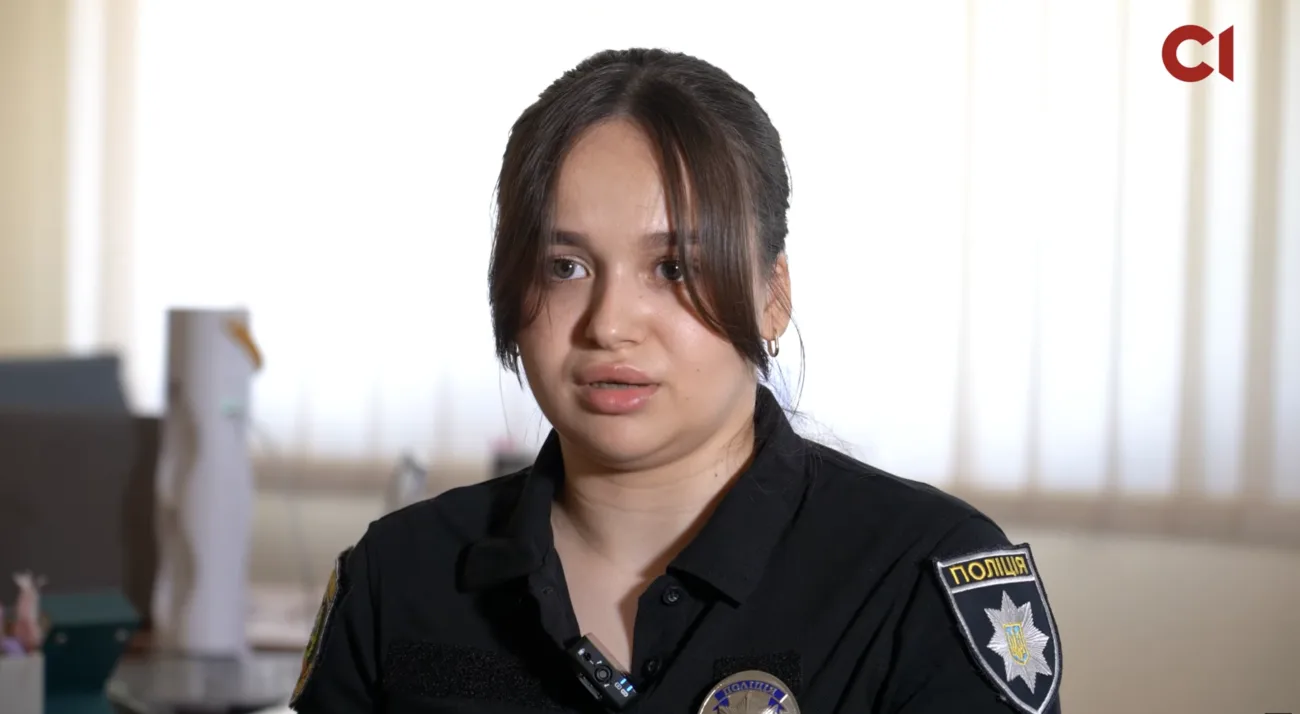
Diana Zobnina, a senior investigator with the Main Directorate of the National Police in Donetsk region who is working on Karpilovych’s case, says otherwise. Investigators, she says, have a statement Kateryna wrote after she was evacuated from Zolotyi Kolodiaz, in which she clearly states that she was subjected to sexual violence. Zobnina adds that, during the interview, the Russian soldier was clearly trying to present himself as a better person than he really is.
Karpilovych and Kateryna were evacuated from Zolotyi Kolodiaz together, Zobnina says:
— The Ukrainian Armed Forces were counterattacking and evacuated the civilian together with the prisoners of war. There was no choice and no separate transport available to keep them apart — this was an area of active combat.
Kateryna and the Russian prisoners of war were separated as soon as they left the danger zone. Speaking to law enforcement, the woman described sexual violence. According to her account, there had been no relationship.
In September, Karpilovych and other Russian soldiers burst into the cellar where Kateryna was hiding with a fellow villager. After that man was killed, Kateryna was left alone with the Russian soldiers. Then, on the night at the beginning of October, Karpilovych raped her for the first time. He threatened her with a weapon, said that he had been in prison and knew very well how to kill, and claimed that his commanders had ordered him not to leave any civilians alive.
Karpilovych denies all of this. He says he never received such an order, and gives contradictory accounts about the weapon: at one moment he says he came into the cellar without one, carrying only a first-aid kit; at another, he insists that Kateryna was not afraid of his rifle and grenades, but treated them “normally.” Investigators have not yet identified the commander who may have given the order to kill civilians.
Washing the Previous Day Off in a Hot Shower
The police say Karpilovych regularly raped Kateryna, and that it continued until 9 December, when Ukrainian troops entered the village.
— When did criminals ever admit they were guilty? Karpilovych’s version is his version, and we have the evidence, — Diana says. — A civilian woman found herself in circumstances where anyone would do everything possible to survive. And no one except experts can say how she felt at that moment or whether she experienced trauma.
After the woman was taken to a safe place and her testimony was passed to the police, law enforcement officers contacted her and she confirmed that she wanted to report the war crime committed against her.
At first the investigator called Kateryna; later they met in person.
— You could see that she was nervous, — Diana recalls, — but I was nervous too: you know, this is the kind of crime that is very hard not to take home with you.
Kateryna’s case is unique, because she spent more than two months in the same cellar as her abuser, and he spoke openly about himself. Diana is not sure whether the woman will appear at the hearings — she says online participation may be possible in this case.
Kateryna is one of 182 officially recognised victims of conflict-related sexual violence, which is how this crime is defined in international humanitarian law. As of July 2026, the National Police were conducting pre-trial investigations in 114 criminal proceedings. The victims in these cases included 113 women, 61 men, and 11 children.
Since the start of the full-scale war, National Police investigators have opened pre-trial investigations in 151 criminal proceedings related to conflict-related sexual violence. Of these, 15 were transferred to the SBU, and 22 investigations have already been completed. Across all years of the full-scale war, there have been 226 victims. The largest number of victims were residents of Kherson, Kyiv, Donetsk, and Kharkiv regions.
Law enforcement officers add, however, that the real number of both such crimes and their victims may be higher. Even victims who are able to contact Ukrainian law enforcement do not always feel ready to speak about what they have endured — for example, because the topic of sexual violence remains taboo, or because they fear for relatives who are still under occupation.
At the same time, 66 people were formally notified of suspicion in absentia. Twenty-two indictments concerning 30 people were sent to court.
Karpilovych’s case is therefore the first in Ukraine in which a suspect in conflict-related sexual violence has been detained and will in fact stand trial. As Diana explains, in cases heard in absentia for war crimes, there is usually not such intense emotion or such a sharp sense of the need for justice. Here, it was crucial to get the notice of suspicion out before Karpilovych could potentially be exchanged.
So Diana and her colleagues collected the evidence and went to the prisoner-of-war camp. According to her, the Russian soldier reacted calmly — no pressure was put on him, he was asked for his version of events, and he did not feel threatened. Diana, however, was frozen stiff: she had never spoken with Russian soldiers before.
— For me, that conversation was an internal test, — she says. — It was easier for me to think of him not as a Russian soldier, but simply as a convict. Otherwise, it would have been hard not to take it personally.
Diana is from Kramatorsk. The last time she was home was over New Year, from 2025 to 2026, and then she was already saying goodbye to the city in her mind.
— I wanted to remember it as it was, not see it ruined, the way it is becoming now, — she says.
Diana is now in Dnipro, where part of the Donetsk region police has been relocated, and investigates crimes committed in the places where she grew up.
She has worked in the police for seven years. Her father also worked there, so from an early age Diana wanted to become an operational officer too. Investigative work, by contrast, seemed boring to her, all paperwork. She wanted to work “on the ground” — talk to people, gather evidence, go to the scene. But once she became an investigator in 2022, she had to work on war-related cases, and the job turned out to be intense, difficult, but anything but dull.
But this Russian man’s in-person case is the first in her practice. She tries to look at it, and at other crimes in the Donetsk region, from a distance. Still, after speaking with Karpilovych and listening to his version of events, she would come home and literally wash the previous day off with a hot shower. Diana reminded herself: she had done her work, Karpilovych would be taken from the camp to the pre-trial detention centre, and he would be tried.
“For there to be peace throughout the world”
Karpilovich’s case has already been referred to court. He faces between 8 and 12 years’ imprisonment. He believes that the court should ‘do the right thing’ — that is, hear his case and acquit him. But he complains:
— These days, it’s the other way round: if you tell the truth, they don’t believe you; if you lie, they believe you.
Karpilovych is convinced that Ukraine has already been sold off, but when pressed for details, he hesitates and gets lost in his own words.
— To whom?
— To those living abroad. In England… Well, part of it, Zaporizhzhia, for instance — there are reservoirs there, and they’re being destroyed. What does that tell you? That someone has already bought Ukraine. So, it’s already been sold off.
His answer makes no sense, so finally we ask:
— And what does justice mean to you in the context of war?
— What do you mean, in the context of war?
— What is justice in wartime?
Karpilovich is silent for a long time. Eventually, his lawyer nudges him towards an answer:
— Justice, Seryoga.
— There isn’t any.
And finally he adds:
— I want there to be goodness and for peace to come. For it all to be over.
— What to be over?
— Well… For there to be peace throughout the world, for there to be goodness, for this war to end.
— And how will it end? What should Russia do with the occupied territories? Withdraw from them?
Karpilovich doesn’t answer. He mumbles something about “they’ve already decided everything” — as if, up there at the top, they’ve agreed on everything, so what can he possibly know or judge.