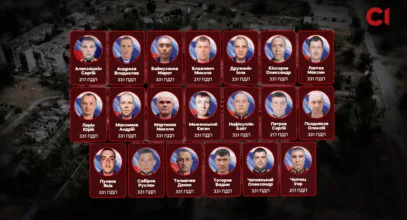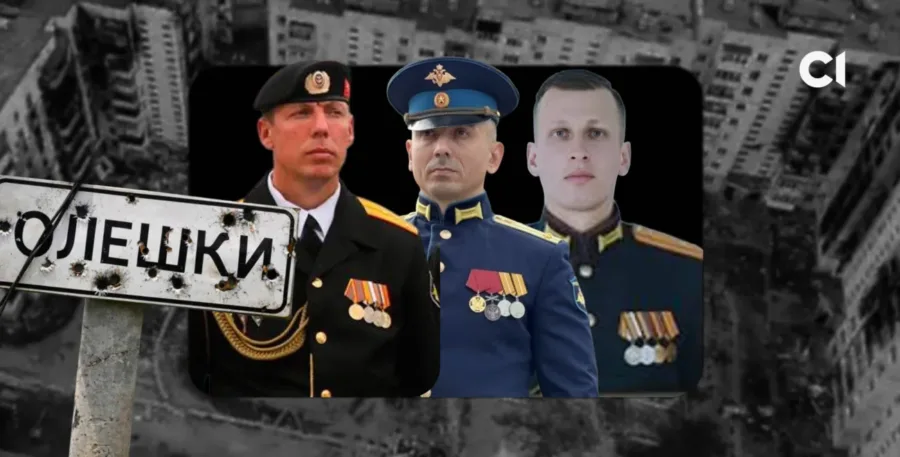
Russian servicemen from the 126th Separate Coastal Defence Brigade of the Russian Black Sea Fleet and the 331st Guards Airborne Regiment may be stationed in occupied Oleshky, on the left bank of the Dnipro River in Kherson Oblast.
This was established by Slidstvo.Info.
The commanders of these units may be involved in the humanitarian catastrophe in Oleshky, where residents are suffering from hunger because Russian forces are keeping the city under blockade.
According to a man living in Oleshky who spoke to journalists, no food or medicine is being brought into the city, and there is no gas supply. Of the four tonnes of food dropped by drones operated by Ukrainian forces in recent days, he received a bottle of cooking oil, a kilogram of flour, a packet of sugar and some tinned food. He shared the food with his neighbours. However, these supplies will not solve the wider problem of hunger or help Oleshky residents get through the coming winter.
Slidstvo.Info reveals who exactly is behind the humanitarian catastrophe in Oleshky.
126th Separate Coastal Defence Brigade
The 126th Separate Coastal Defence Brigade of the Russian Black Sea Fleet was formed in 2014 from servicemen of the former Ukrainian 36th Coastal Defence Brigade who defected to the enemy following the occupation of Crimea. The brigade is stationed in the village of Perevalne on the peninsula.
Following the start of Russia’s full-scale invasion of Ukraine in February 2022, the brigade took part in combat operations in Kherson Oblast, including the battles for Voznesensk.
According to the General Staff of the Armed Forces of Ukraine, by mid-April 2022, the brigade had lost up to 75% of its personnel. Nevertheless, the Russian authorities awarded it the honorary designation of “Guards” for its “courage”.
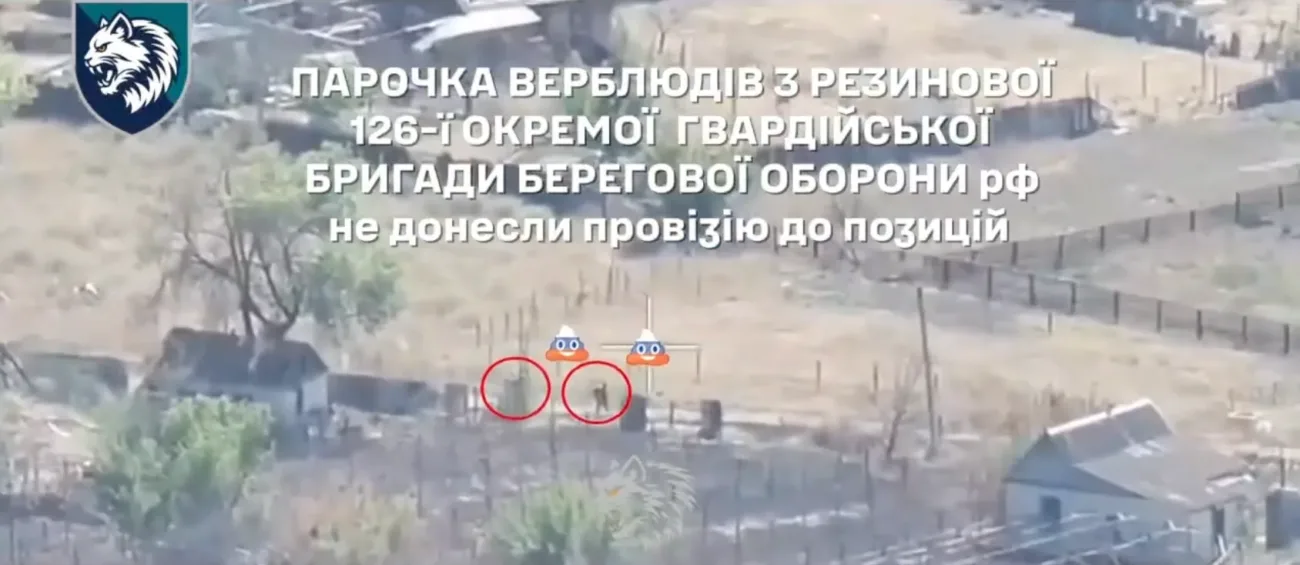
The brigade continues to fight on the Kherson front, including as part of the Russian “Dnepr” Group of Forces. In early September, Ukraine’s 34th Separate Marine Brigade reported killing several servicemen from Russia’s 126th Brigade at a small cemetery near Oleshky.
In one of the Russian Telegram channels, Slidstvo.Info found a reference to the brigade’s commander. As of May 2025, the position was held by Colonel Oleg Aleksandrov. Leaflets recounting the “hero’s” story were reportedly distributed to schoolchildren in the Russian city of Tver.
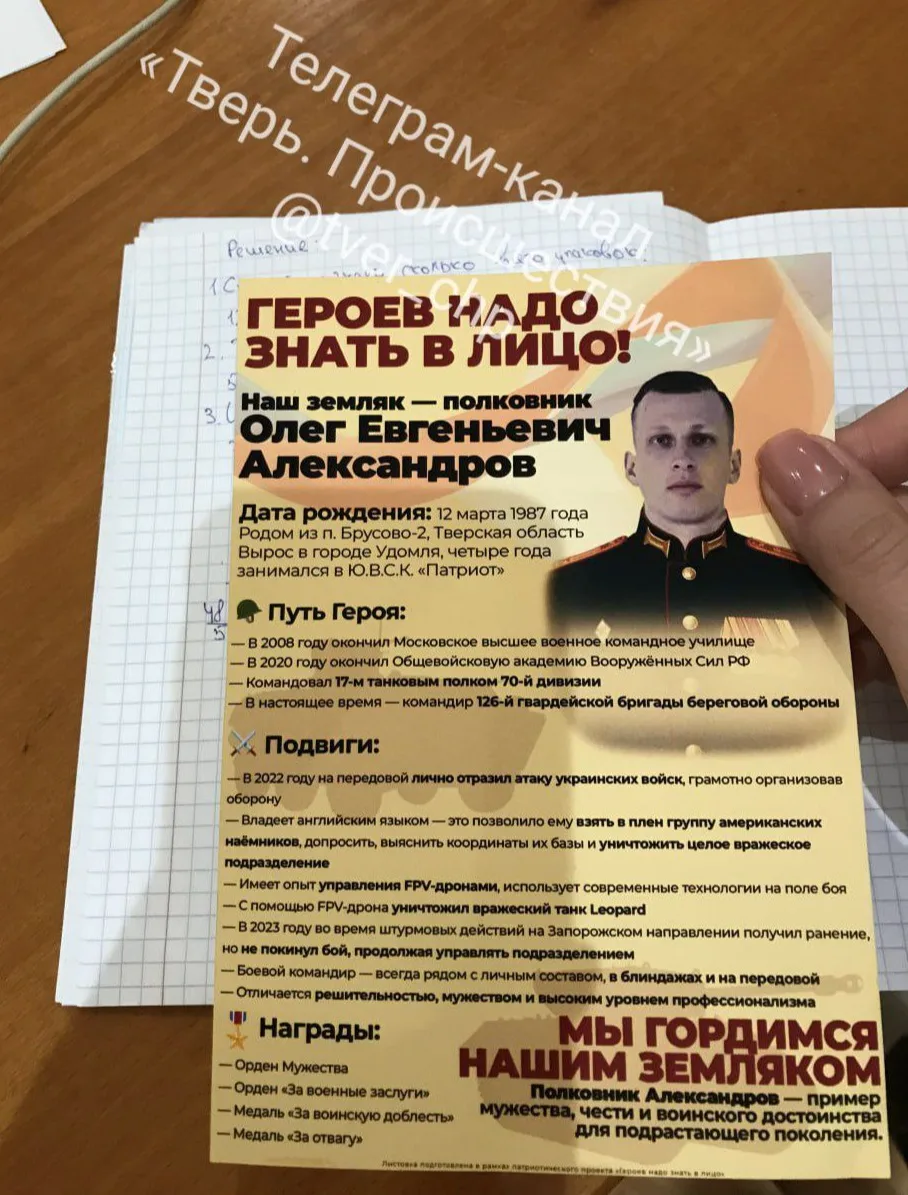
Aleksandrov was born in 1987 and graduated from the Moscow Higher Military Command School and the Combined Arms Academy of the Russian Armed Forces.
According to Russian sources, following the start of the full-scale invasion, he personally repelled an attack by Ukrainian troops. He also allegedly captured American mercenaries and, in 2023, continued fighting despite being wounded.
In one interview, Oleg Aleksandrov spoke about his grandfather, who, after the Second World War, was “finishing off the Bandera followers (transl. — banderivtsi in Ukrainian)” in western Ukraine.
Previously, Aleksandrov commanded the 17th Tank Regiment of Russia’s 70th Division, which was also stationed on the left bank of the Dnipro River in Kherson Oblast.
“A combat commander is always alongside his personnel, in dugouts and on the front line,” the Russian leaflet reads.
Meanwhile, Russian servicemen themselves have publicly spoken about issues within the brigade. In late July, they published an appeal to the leadership of the Russian Ministry of Defence, the Main Military Prosecutor’s Office and the Investigative Committee of the Russian Federation.
However, the appeal has since been deleted from most Russian online sources, leaving only a few isolated comments. Slidstvo.Info obtained the full text, in which the Russian occupiers complain about shortages of equipment, problems evacuating wounded and dead servicemen, and accuse their commanders of concealing the true number of casualties. They claim that the brigade’s units are scattered across different positions on the Kherson front, disrupting command and control as well as supply operations.
In their appeal, the soldiers call for a comprehensive inspection and personnel audit of the military unit’s command, the withdrawal of the brigade for regrouping and recovery, a review of the supply system, and the establishment of evacuation procedures and medical support.
It is currently unknown whether the brigade’s command has changed following the appeal. However, the independent OSINT project “Commanders of Failure” identifies 43-year-old Konstantin Kochetkov as the commander of the 126th Coastal Defence Brigade.
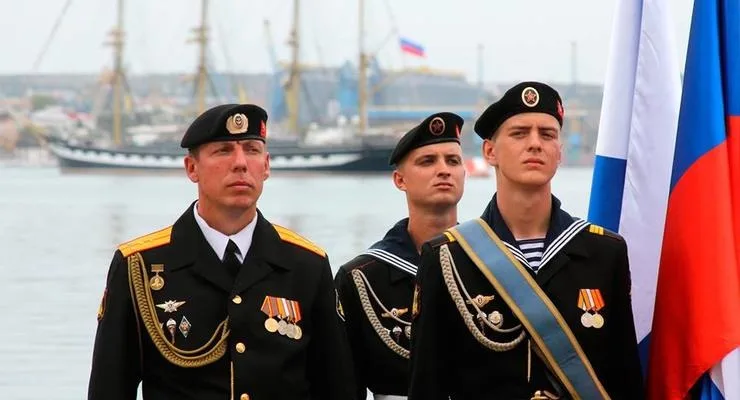
According to Ukraine’s Defence Intelligence, at the beginning of Russia’s full-scale invasion, he was a marine battalion commander, holding the rank of lieutenant colonel in the 177th Separate Marine Regiment of the Caspian Flotilla.
331st Airborne Assault Regiment
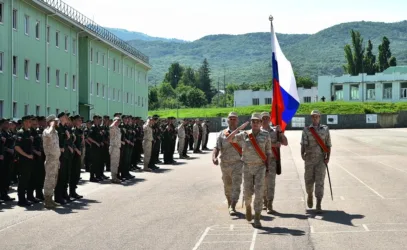
The 331st Guards Airborne Regiment is part of the 98th Guards Airborne Division of the Russian Armed Forces. It is based in Kostroma Oblast and is considered an elite formation of the Russian Airborne Forces.
It was units of the 331st Regiment that shot Ukrainian servicemen attempting to escape encirclement in Ilovaisk through the so-called “green corridor” in 2014.
Following the start of Russia’s full-scale invasion of Ukraine, the regiment took part in the offensive in Kyiv Oblast and later fought on the Svatove–Kreminna and Bakhmut fronts. In 2024 and early 2025, the unit was deployed in the battles for Chasiv Yar.
According to Slidstvo.Info, servicemen from the 331st Regiment are also stationed in the Russian-occupied part of Kherson Oblast, particularly in the area of the Oleshky territorial community.
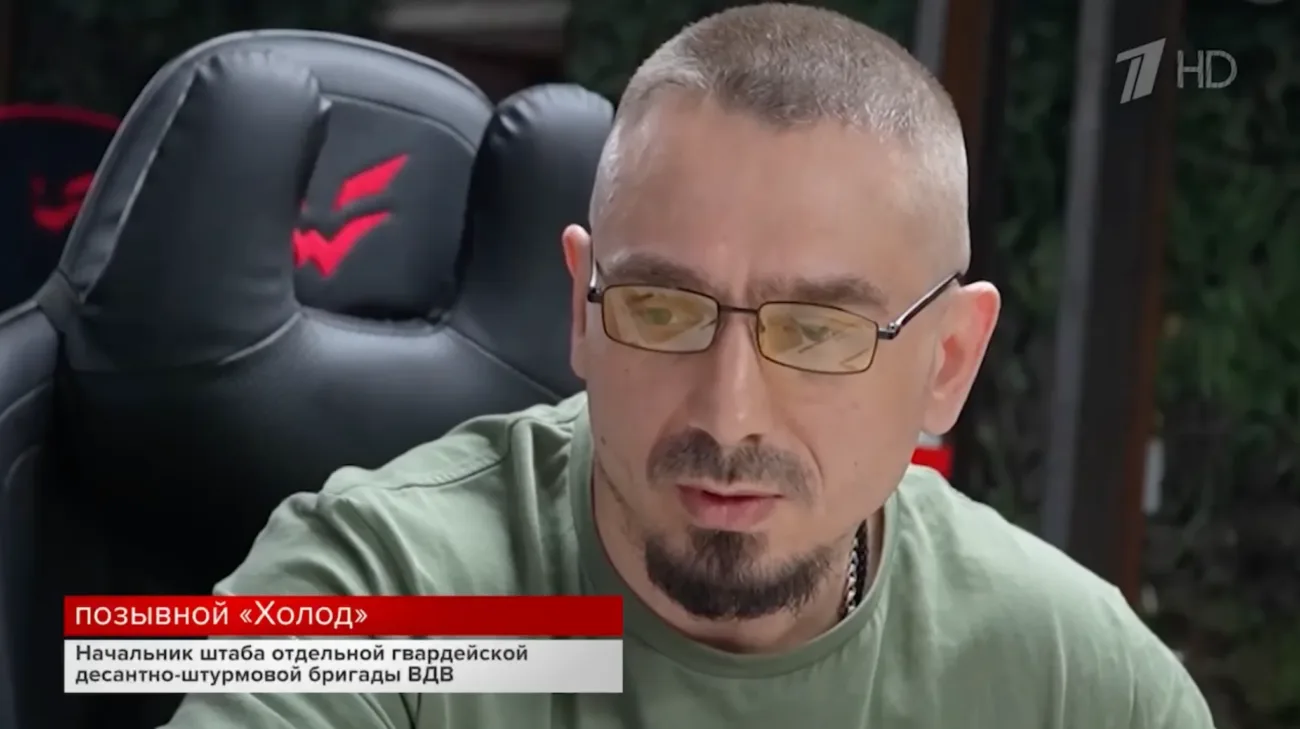
According to a post by Sergei Sitnikov, the governor of Russia’s Kostroma Oblast, the 331st Regiment is commanded by 40-year-old Oleg Morozov, whose call sign is “Kholod”. He was appointed commander in August last year.
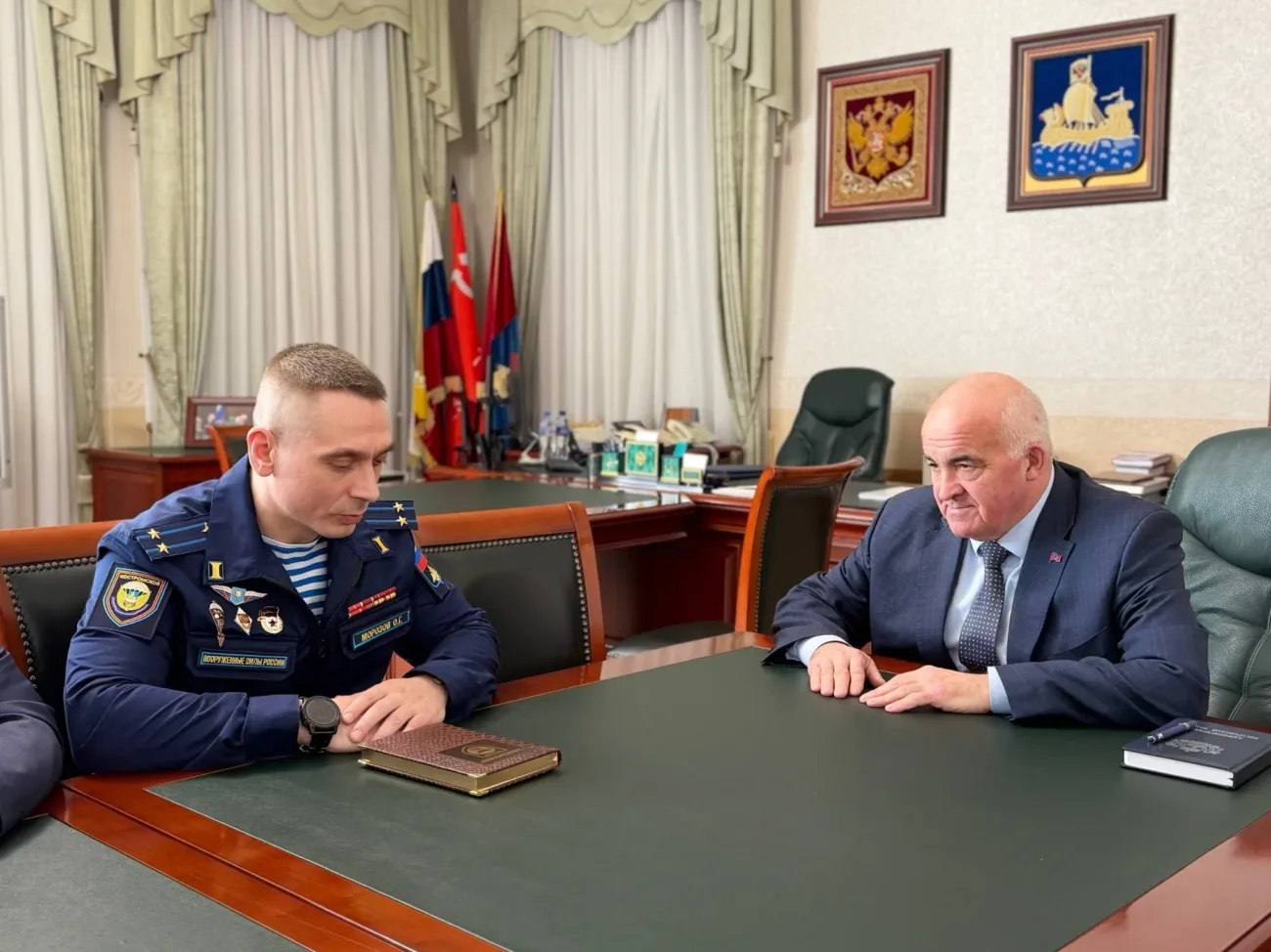
Morozov previously served as chief of staff and deputy commander of the 83rd Separate Air Assault Brigade, based in Primorsky Krai. The brigade took part in the battles for Zhuravka in Sumy Oblast, as Morozov stated in an interview with Russian media.
“In total, we’ve already defeated two battalions in Zhuravka. There’s nothing left of them there,” Morozov said.
Slidstvo.Info also found that Morozov has a wife, Olga, and two children, Sofia and Mykyta.
Wife of the commander of the 331st Regiment, whose servicemen are stationed in Oleshky
What Is Known About the Blockade of Oleshky
Oleshky, located 9 kilometres from Kherson, has been under Russian occupation since the first days of the full-scale invasion. According to Oleksandr Prokudin, head of the Kherson Regional Military Administration, around 2,000 people remain in the city, including 50 children. Before February 2022, the city had a population of more than 24,000.
The city has no electricity or gas supply, and access to food, medicines and other humanitarian aid is limited.
The Ukrainian authorities have repeatedly stated that Russian servicemen are obstructing the delivery of aid and the evacuation of civilians from occupied settlements. As early as May, Ukraine’s Ministry of Foreign Affairs reported that the situation was deteriorating in Oleshky, Hola Prystan, Stara Zburivka and Nova Zburivka.