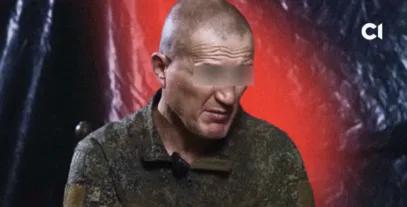
Speaking in parliament immediately after his appointment as Minister of Defence on 14 January 2026, Mykhailo Fedorov said that there are currently 200,000 soldiers in the Ukrainian army who abandoned their units without permission (transl: “СЗЧ” in Ukrainian (SZCH) literally means “unauthorised abandonment of the military unit”; it is roughly equivalent to being AWOL, therefore this term is further used in the article as a translation).
He later stated that the Ministry of Defence is attempting to resolve the issue of unauthorised abandonment of units.
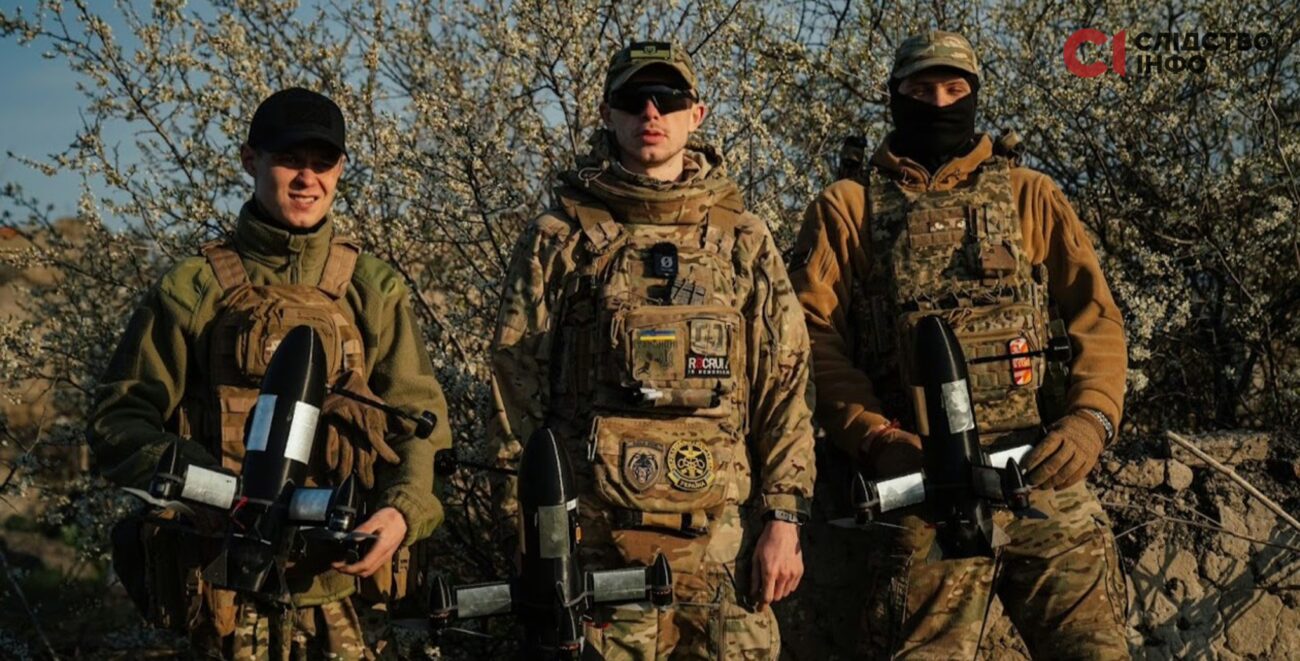
Slidstvo.Info spent several days with the crews of interceptor drones and the military personnel who maintain these crews.
In the ‘Balu’ UAV company of the 225th Separate Assault Regiment, half of the soldiers have a record of AWOL — unauthorised absence from their unit — in their service records.
But now they are back in the army.
“They were interested in the status of the Starlink and the generator; they weren’t interested in the people”
“The entire crew is AWOL,” says Mykola, commander of the interceptor drone team, whose call sign is ‘Tamozhnia’.

Before the war, Mykola worked at the central customs office and could have avoided being mobilised into the army, but he decided to go and fight. ‘Well, there’s a war on,’ he says, explaining his motivation, which seems obvious to him.
Mykola is 28 years old. He spent two of those years in the marines as a drone pilot. Together with his commander, he wanted to transfer to the 225th Separate Assault Regiment, but the marine command would not let him go. He managed to do so through the AWOL.
“I don’t even consider this to be AWOL. It’s very difficult to transfer from the marines through official channels. I submitted reports, waited a very long time, and in the end I transferred effectively through the AWOL. I told the command that I was leaving, and we shook hands,” says Mykola.
Now he is successfully shooting down Russian kamikaze drones in the Zaporizhzhia sector.
The co-pilot in this crew is 23-year-old volunteer Danylo, call sign ‘Holova’. He was also a drone operator in the marines. Once, the Russians hit the dugout where his crew was stationed. The position caught fire, and it took two days to get out of there.

‘When we finally returned, the first question they (the command, ed.) asked was about the equipment, not the people. They were interested in the Starlink and the generator. The people were treated like meat,’ recalls Danylo.
After that, he decided to go AWOL.
“I decided that service there wouldn’t work out, so I went AWOL,” says the soldier.


Unlike “Tamozhnia,” who was AWOL for just one day, Danylo spent four months in hiding.
Asked whether he was not afraid of being caught and sent to storm a tree line, he replies:
“Fast legs aren’t afraid. What is there to fear? I joined the army voluntarily, but I can’t voluntarily leave the marines.”
The third member of the crew is an engineer, Tioma, callsign “Timon.” Previously, he served as an infantryman in the 5th Assault Brigade. After repeated assaults on tree lines, he also failed to secure an official transfer, so he moved to the short-range air defence company of the 225th Separate Assault Regiment through “SZCh” — unauthorised abandonment of his previous unit.
All three give the same reasons for making the move: decent supplies and treatment in their current unit, and poor conditions in the previous one.

“A neighbour ratted me out to the military police after I complained about him playing loud music”
“Baks” has a somewhat more dramatic story. Journalists met him not at the interceptor-drone positions, but at one of the regiment’s workshops on the Zaporizhzhia front.

“Baks” fought as part of the 57th Brigade during the battles for Vovchansk in the summer of 2024.
“I wanted to join back in 2022, but the enlistment office wouldn’t take me then. So in 2024 I decided to give my mother-in-law a present and went back to the recruitment office,” he jokes.
That summer, he took part in the fighting around the Vovchansk Aggregate Plant.
“We, the infantry, were cutting off their [the Russians’ — ed.] logistics. So they were at the plant and behind us, while we were stuck in the middle. Surrounded, basically,” Baks explains.
According to him, the Russians spent two weeks trying unsuccessfully to dislodge them from their positions.
Baks and his comrades eventually managed to break out of the encirclement. Some time later, as an already experienced soldier, he was asked to lead newly mobilised recruits to the positions — across a minefield.
“I asked one of them: ‘Have you even zeroed your rifle?’ And he says: ‘No. Why would I?’ That’s when I realised: I’m used to explosions and I know what to do. But he’ll panic, run left or right — and end up a 200 [killed in action — ed.],” the soldier recalls.
After that, Baks refused to lead men to the positions and told his commander he was going into SZCh — unauthorised abandonment of his unit.
He returned home, but several months later a neighbour reported him to the Military Law Enforcement Service.
“My neighbour was blasting music at midnight. I argued with him about it, and later he called the military police on me,”
“Baks” says.
At a redistribution centre, recruits from the 225th Separate Assault Regiment asked whether he knew how to solder. He replied that he had done it before — and that is how he ended up in the workshop of “Balu” company, where he now repairs and assembles drones.
“Either way, it’s all the same job — storming positions or soldering drones,” he says.


“I’m an artist — what does the army need artists for?”
Another serviceman working in the same workshop goes by the callsign “Zriachyi” (“Sharp-Eyed”). His surname is Slipets — literally “blind man” — which is how the company came up with the nickname. Before being mobilised, he worked as a 3D modeller and did not believe his skills could possibly be useful in the military.

“I’m an artist. What does the army need artists for?” he says.
Police stopped “Zriachyi” on a street in Kyiv, asked him into a van, and drove him to a Territorial Recruitment Centre (TCC). From there he was sent to a training centre, where he was being prepared as a rifleman.
There, “Zriachyi” came down with pneumonia and went AWOL directly from the hospital. Later, through acquaintances, he arranged to join the 225th Regiment as a drone pilot. But on the way to the unit, the commander asked what skills he had, and Zriachyi mentioned that he was actually a 3D artist.
“And I’d been looking for 3D artists, thinking: where the hell am I even supposed to find them?” says the commander of “Balu’’ company, recalling the encounter.
Now the company has a real artist who designs drone components and explosive casings.
“It’s basically like a regular job, just without weekends. I feel like I’m doing something useful. The conditions are fantastic,” “Zriachyi” says.
“They won’t just let you leave the infantry”
Ivan, call sign “Mukha” (“Fly”), is the second pilot in the “Ursa” crew, which shoots down Russian fixed-wing drones known as Molniya. These are currently among the most dangerous drones both for the front line and for civilians living within several dozen kilometres of it. A Molniya can carry up to eight kilograms of explosives, and the Russians produce them on a mass scale. Ivan’s crew shoots down between five and ten such drones a day. They also target Lancets, reconnaissance ZALA drones, and strike drones called Knyaz Veshchiy Oleg.

Ivan is 29 years old. This is his fifth year at the front. He signed a contract with the Armed Forces of Ukraine before the full-scale invasion.
At first, Ivan served as an infantryman in the 92nd Brigade.
He also transferred to this unit through AWOL.
“They won’t just let you leave the infantry,” the pilot says.
“I informed them I was leaving. And I left. I said: ‘I’m going home, ciao.’ That was it — packed my suitcase, handed everything over…”
Ivan says he decided to return to the military of his own accord.
“It just pulls you back here now. Feels like home. When you go back to your wife, it’s almost like you’re just visiting,” “Mukha” explains about why he returned.

230,000 SZCh Cases
For some time, the 225th Separate Assault Regiment was one of the few priority units that accepted servicemen returning after unauthorised abandonment of their unit. That is why all the men featured in this story managed to come here for better positions or better conditions than at their previous postings.
Often, however, things work differently. Those who are forcibly returned or who go into SZCh repeatedly are usually reassigned to infantry or assault units.
Unauthorised abandonment of service during martial law is a criminal offence punishable by imprisonment for 5 to 10 years.
According to the Office of the Prosecutor General, over 230,000 cases of AWOL have been opened since the start of the full-scale invasion of Ukraine.
Defence Minister Mykhailo Fedorov has already stated that it is impossible to resolve the issue of unauthorised abandonment without addressing the question of mobilisation.
The Ministry of Defence and the Verkhovna Rada are currently discussing amendments to the Criminal Code: tougher penalties for repeat AWOL, and for those who return voluntarily, a simplified process for reinstatement and a reduction in criminal penalties.
This material was produced with the support of the International Fund for Journalists’ Insurance project, implemented by the Association of Independent Regional Publishers of Ukraine. The project is part of the Voices of Ukraine / SAFE programme, coordinated by the European Centre for Press and Media Freedom. Voices of Ukraine / SAFE is carried out within the framework of the Hannah Arendt Initiative with the support of the German Federal Foreign Office.