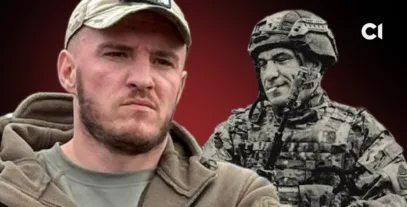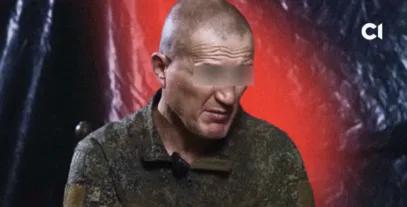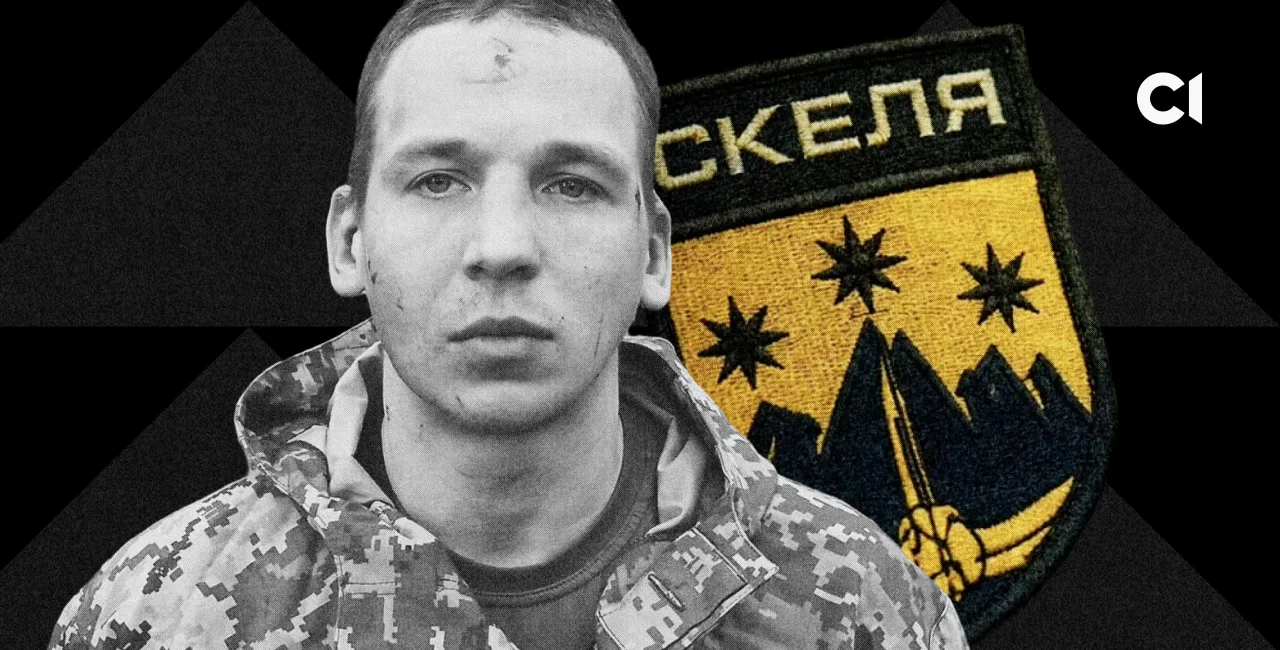
Arkadiy goes off the grid the same day news outlet Babel publishes its story about deaths in the rear in the Skelya assault regiment. Before vanishing, he sends screenshots of messages from strangers who claim to know where he is. Arkadiy fled from the Skelya regiment to go AWOL. During the pursuit, he was shot in the leg.
Yuriy also went AWOL after one of the regiment’s commanders beat him while he was on leave. He fears for his life and asks that his name be changed.
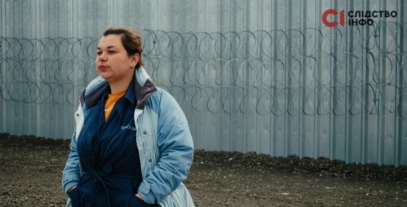
The mother and sister of Oleksandr, who was shot by a Skelya fighter, postpone the call several times. What unites them all is one thing — through their stories, Slidstvo.Info shows what Skelya does to those who go AWOL from the regiment.
“He was fleeing, but why did they just shoot him instead of putting him on trial?” The story of Oleksandr Zavalov
“On May 20, a person was shot here, and on the 21st, we are already celebrating Vyshyvanka Day in the same place. That is how we live,” a user comments on a Facebook post by the Oleksandrivka village council in Kirovohrad Oblast. In the photo, several dozen people in embroidered clothing walk through the center of the village.
The woman was writing about the killing of Oleksandr Zavalov, who had been conscripted into the Skelya regiment. On the eve of his 30th birthday, he was shot by his fellow serviceman, Maksym Cherevan. It happened in the afternoon in the center of the village.
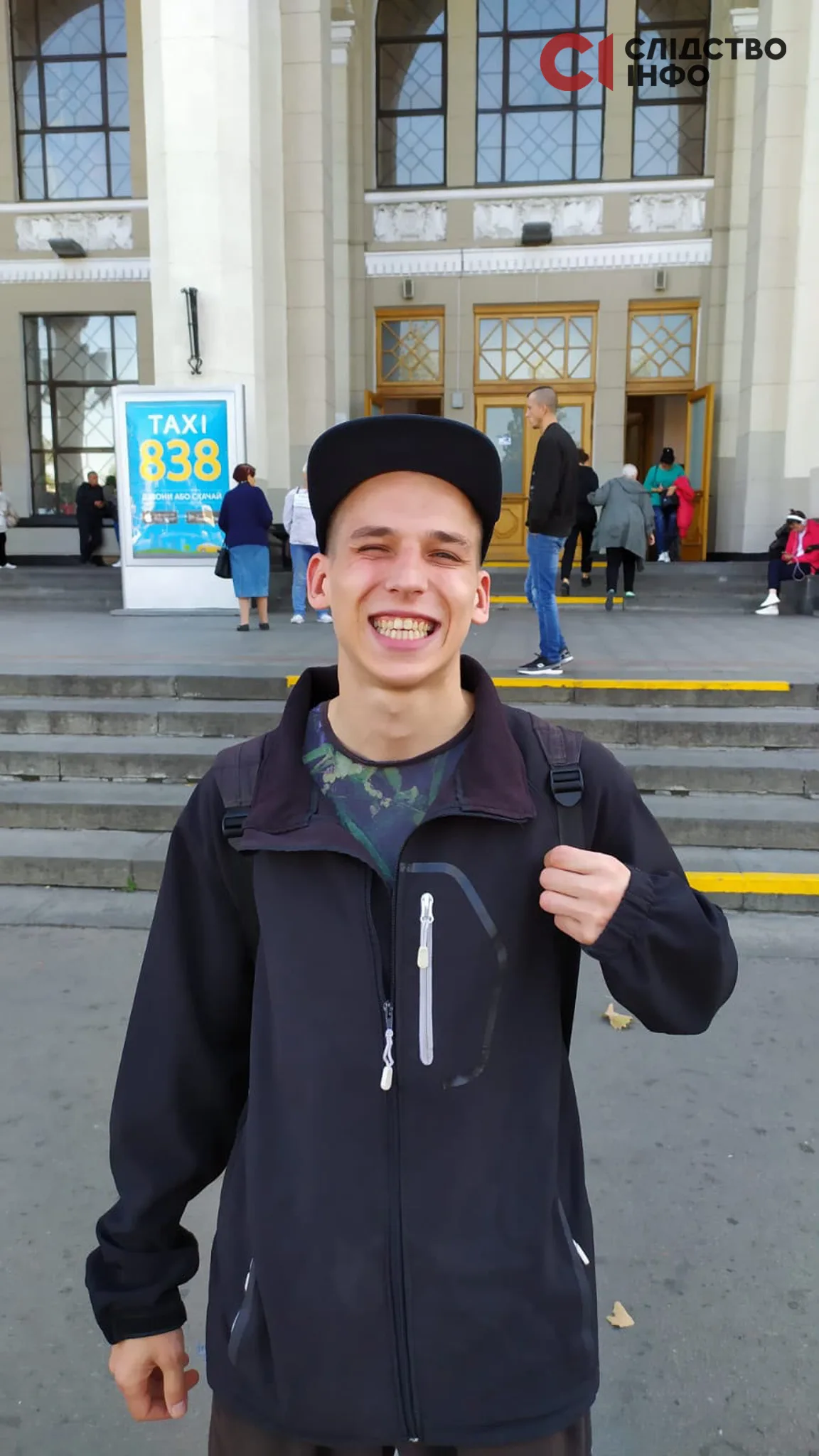
Local police initially explained the cause of the killing as a conflict between two servicemen.
Lada Zavalova, Oleksandr’s mother, says her son had been treated at an Odesa rehabilitation center in the winter of 2026. Oleksandr began using drugs after his father’s death several years earlier, and last year, his older brother disappeared without a trace in Odesa.
In January 2026, Oleksandr left the rehabilitation center and was stopped by military recruitment center workers. He did not have documents with him. He was sent to the 425th Skelya Separate Assault Regiment. Oleksandr spent the last week of his life at the regiment’s training ground in Kirovohrad Oblast.
Lada Zavalova says her son called from the training ground once a week, always from different numbers and under someone’s supervision. According to her, he was in a bad psychological state and was denied medical assistance. She recalls her son saying, “Mom, I am in hell, pray for me.”
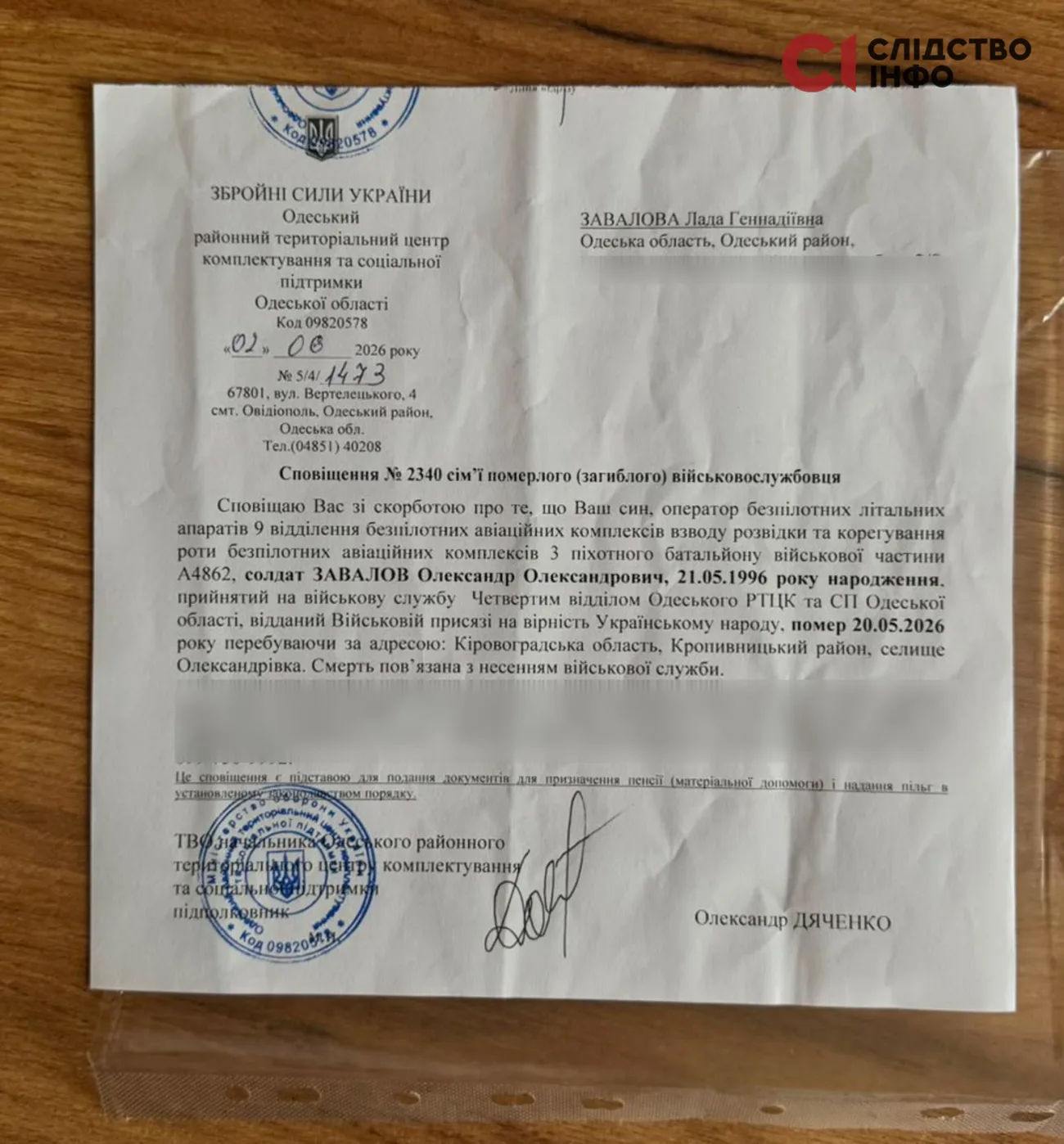
The military recruiters informed Lada Zavalova of her son’s death by phone five days after he was killed. According to her, the dialogue went like this:
“Your son has died.”
“What did he die from?”
“From blood loss.”
“Was he killed?”
“No, he was not killed.”
“Then what from?”
“From a gunshot.”
“So he was killed?”
“No.”
During the body identification at the morgue in Oleksandrivka, Lada and Oleksandr’s sister, Anfisa, were given a death certificate. Ihor, who did not give his last name, also spoke with them. He introduced himself as the commander of a Skelya Separate Assault Regiment group, which had accompanied her son to the Administrative Services Center (ASC) to obtain a duplicate passport along with other soldiers.
According to Ihor, there were 10 people in the group that went to the ASC: six conscripted soldiers, including Zavalov, two guards with assault rifles, and two armed commanders. Anfisa retells Ihor’s words about what happened near the ASC:
“Sasha was waiting in line, having paid, and went to the outdoor toilet with an armed guard. In the toilet, according to Commander Ihor, [Oleksandr] climbed out the window and tried to flee. Ihor said he heard a shot, then ran outside and saw that Oleksandr was already lying there in convulsions. He asked the subordinates why they had not helped him, but they replied that there was no point because the blood had flowed out very quickly.”
As police later established, 27-year-old Skelya serviceman Maksym Cherevan fired four rounds from a CZ Bren 2 assault rifle in Zavalov’s direction. One of them pierced his pelvic artery, causing Oleksandr to bleed out within minutes.
That same day, police detained Cherevan and took him into custody on suspicion of murder. The serviceman’s lawyer pointed out that significant circumstances had not been clarified, including who exactly had sent his client to the ASC and for what purpose, why he had been issued a weapon, and what instructions he had received from command. But the court did not examine these details.
The hearing also revealed that Cherevan had already been convicted. In 2018, he stole a pipe from the enterprise where he worked and received a suspended sentence. A year later, he stole a lawnmower from one house and a phone and 900 hryvnias ($35) from an acquaintance in another, for which he received three years in prison.
When Lada Zavalova was informed by phone of Oleksandr’s death, she was shocked.
“Well, all right, suppose he was fleeing. Although that is according to the commander’s words, I do not even know if it is true. But if he was fleeing, then put him on trial. Why did you shoot him?” she says.
When asked to describe Oleksandr, Anfisa recalls that her brother studied to be a cook, made excellent borsch, and loved baking pies most of all. She says this at the end of the conversation, which had to be postponed several times. Although Oleksandr’s death story in Skelya is not the first of its kind, they fear the consequences of publicity.
Yet in the end, the women decided to speak: “We cannot help Sasha anymore, but maybe we can help the people who are still there.”
“I ran through forests, rivers, swamps, and minefields. They shot at me, I pulled a bullet out of my leg.” The story of Arkadiy Kukshyn
By all indications, 36-year-old Arkadiy Kukshyn should not have been conscripted — he worked at a critical infrastructure enterprise, was a full-time student, and had moreover been removed from military registration before 2022 because of a prior conviction.
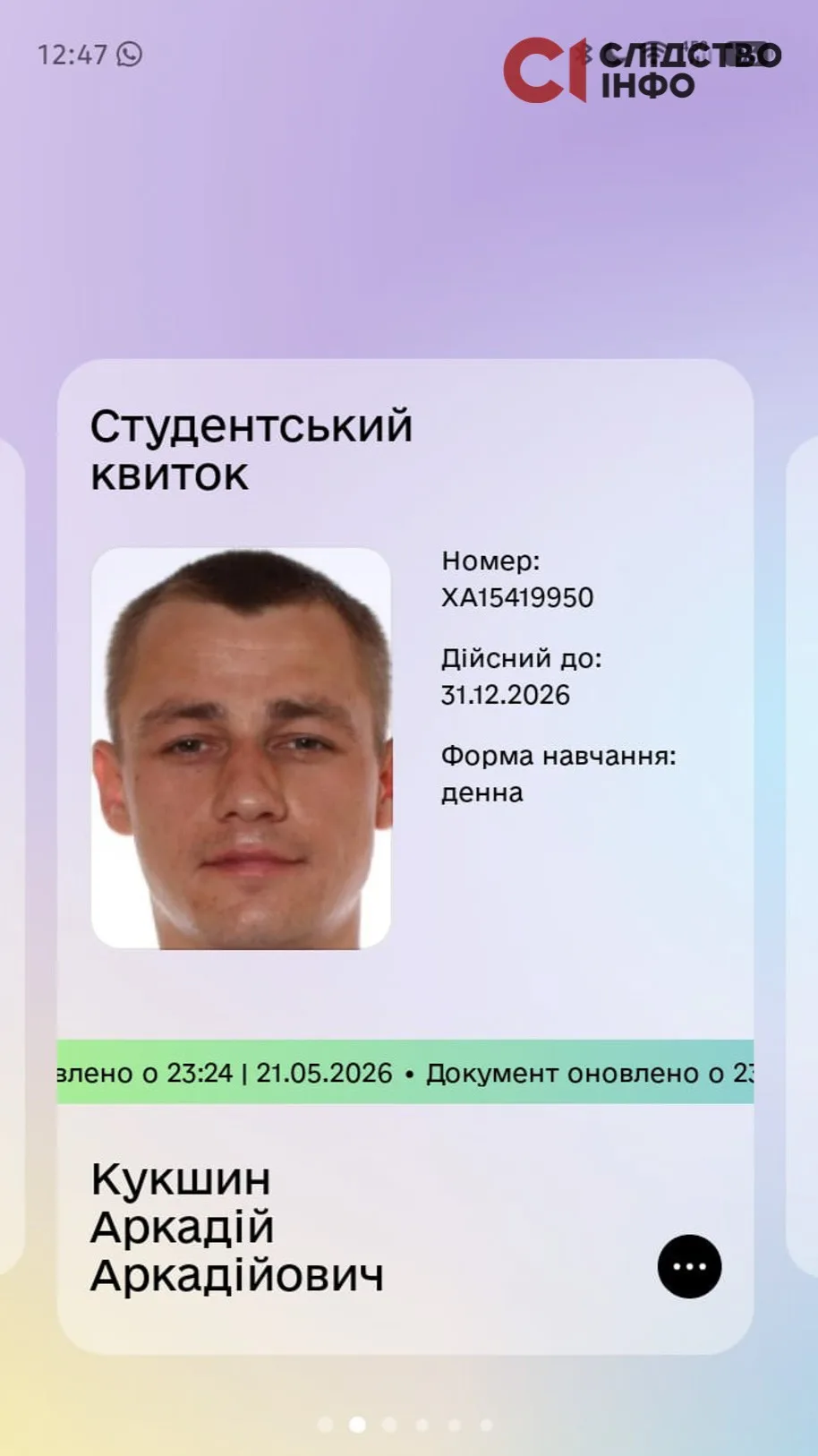
But on April 28, he was detained by military recruitment center workers in Kharkiv. Arkadiy resisted; during the fight, they knocked out his tooth and sprayed his eyes with tear gas. He was sent to the 425th Skelya Separate Assault Regiment. He underwent combat training at the regiment’s training ground in Sumy Oblast.
“There, 600–700 people walk under guard. Everyone from that location wants to flee, but everyone thinks it is impossible,” Arkadiy says. He spent a week there.
Once during training, someone left a water bottle at the training ground. Arkadiy is sure it was one of the instructors. But the recruits were the ones punished. They were forbidden from drinking water for a day and a half. Wearing bulletproof vests and helmets, they had to run through obstacle courses, practice shooting back, and take cover from grenades—all without a single drop of water.
“You are dripping with sweat, and you are very thirsty. We found a puddle in the forest and tried to drink from it,” Arkadiy recalls.
He decided to flee on May 4 at 4:30 a.m. The area around the training ground was mined.
“I go out through the mines, run through the forest, around 7 a.m. I come out to a village, run into a Skelya patrol. They start shooting at me. I was wounded twice. I ran through fields, forests, swamps, miraculously escaped from them, and I was out of it,” Arkadiy says about the escape. “They were ready to shoot me just so I would not flee from BCAT (Basic Combined Arms Training — ed.).”
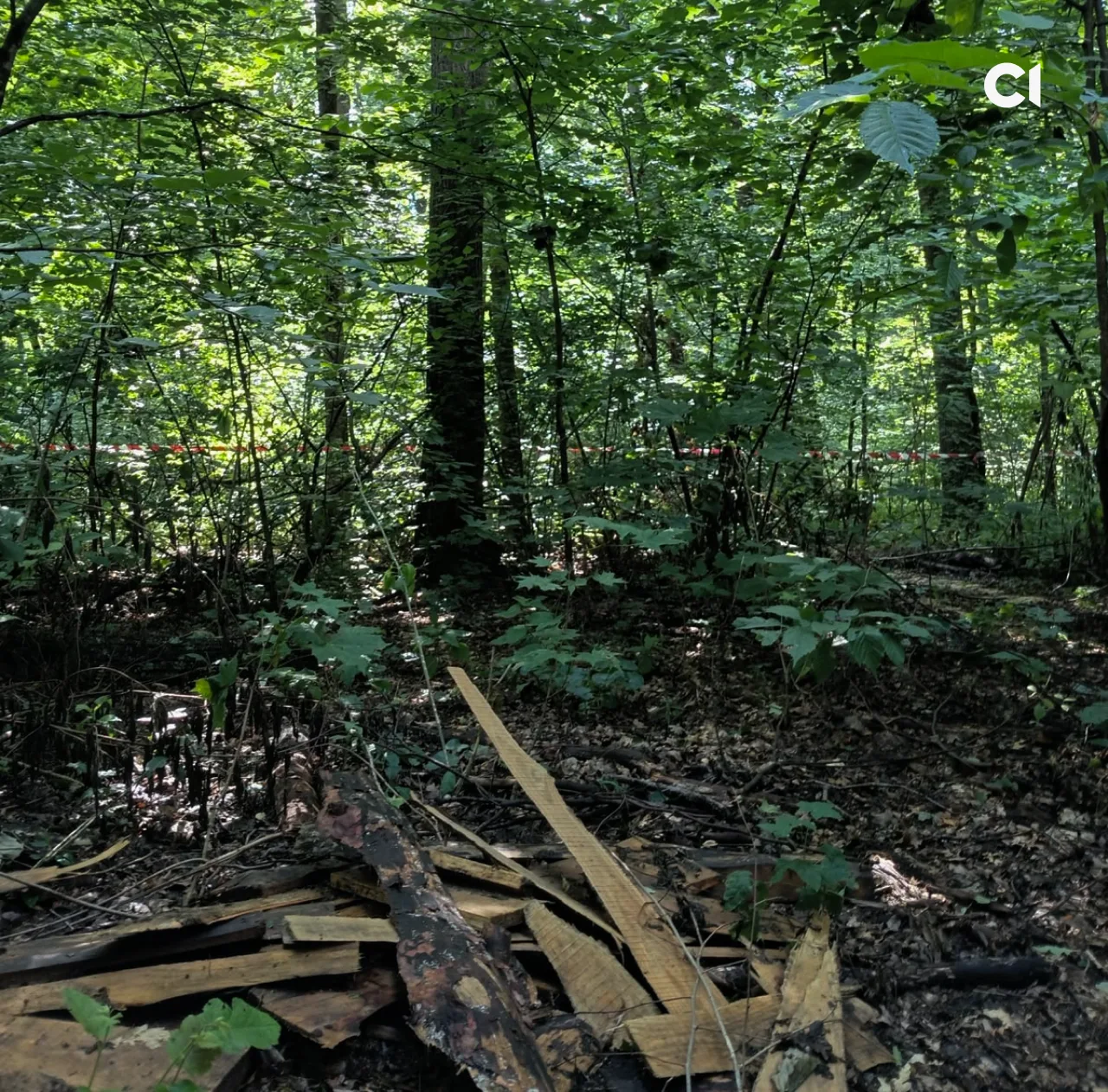
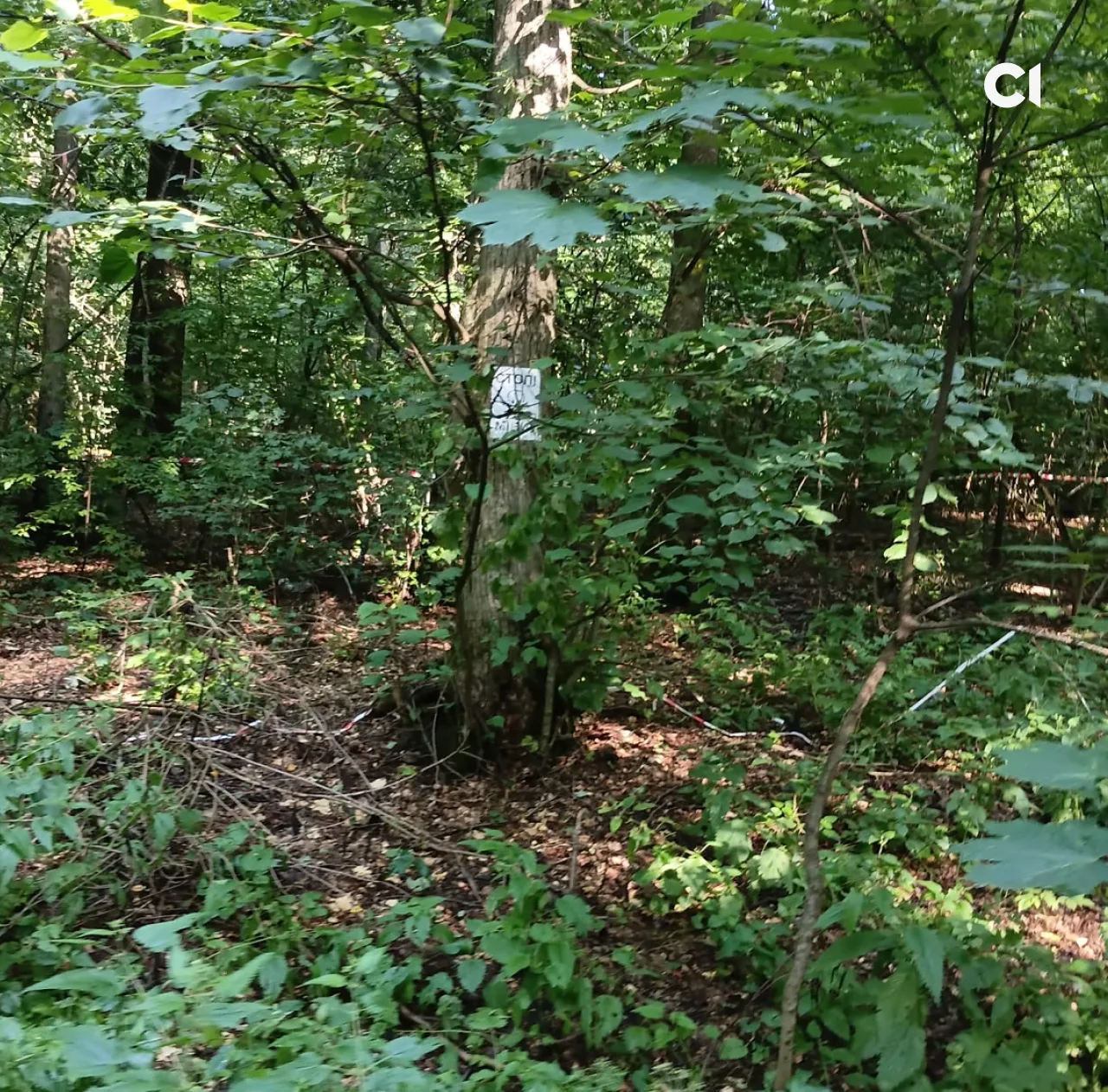
In the photo: behind the hazard tape, 10–15 meters away, tripwires with F1 grenades on green semitransparent fishing line. Sometimes explosions are heard when a branch is blown onto a tripwire. At that moment, a group drives out, and a drone is launched into the sky.
He reached Kharkiv and went not to his own place but to acquaintances’ apartment. For five days, he lay with a gunshot wound. His wife came to give him antibiotic injections. Then a doctor secretly removed the bullet from his leg. Several fragments still remained in his left palm. Because of them, his hand functions poorly.
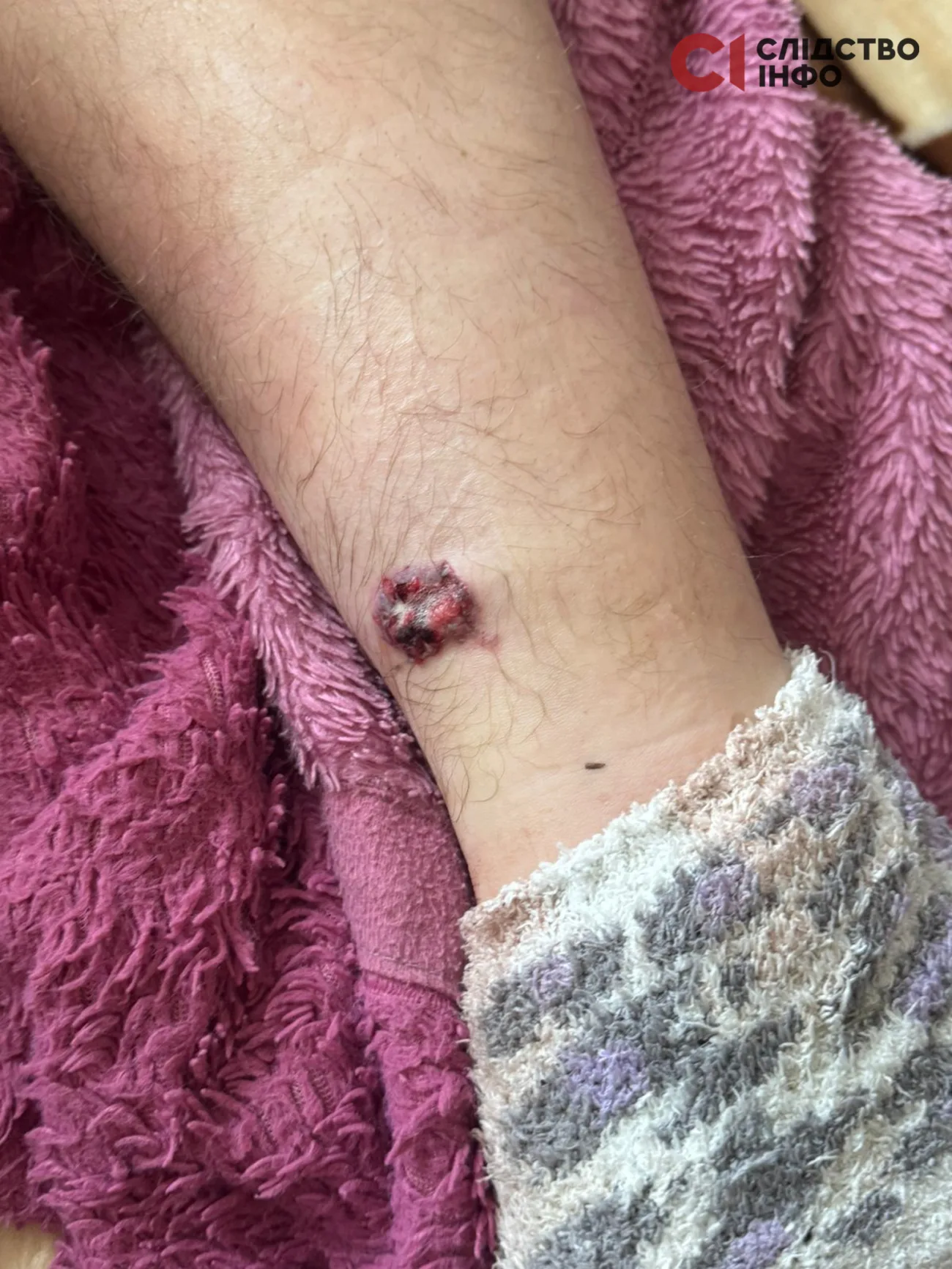
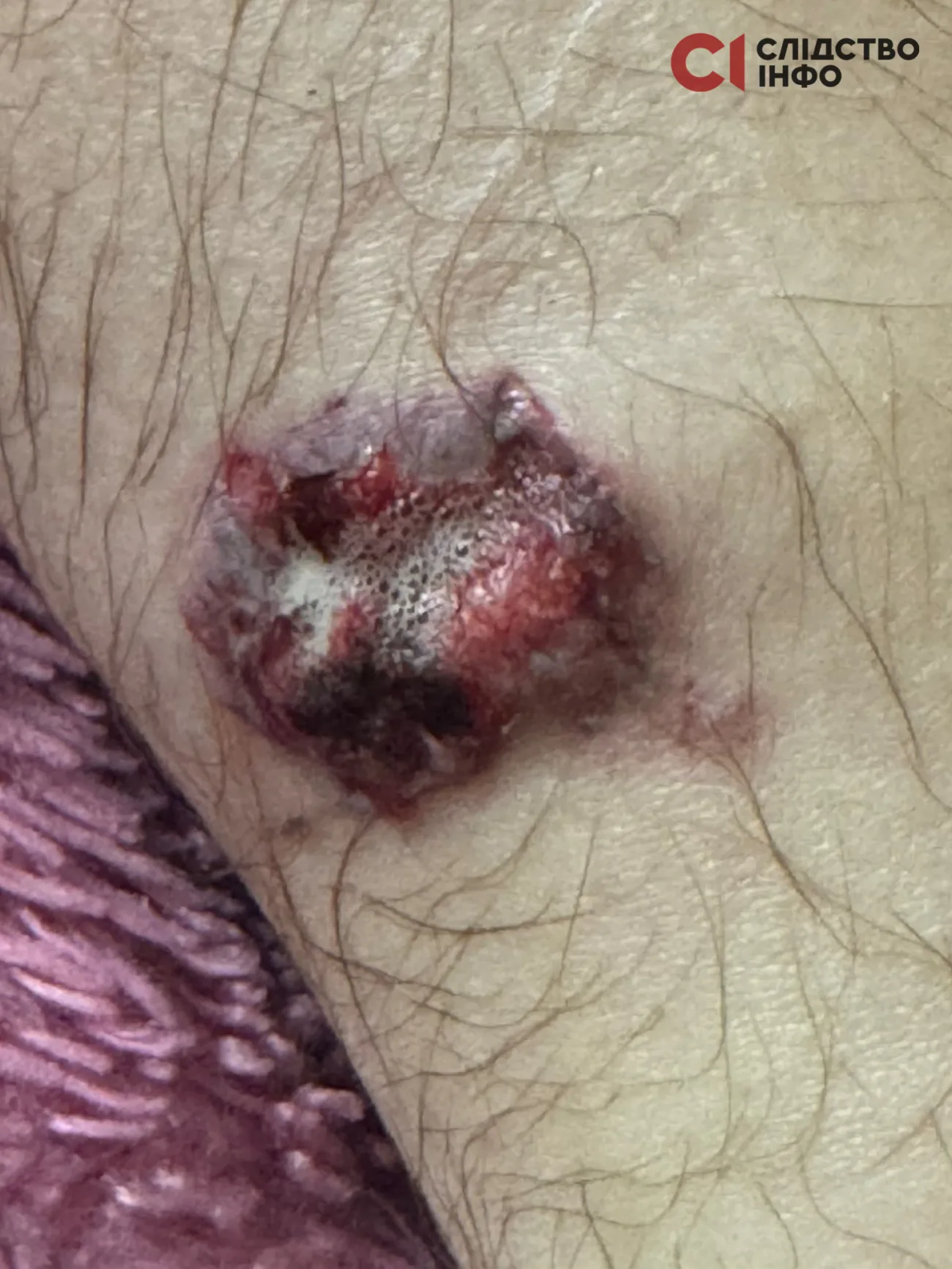
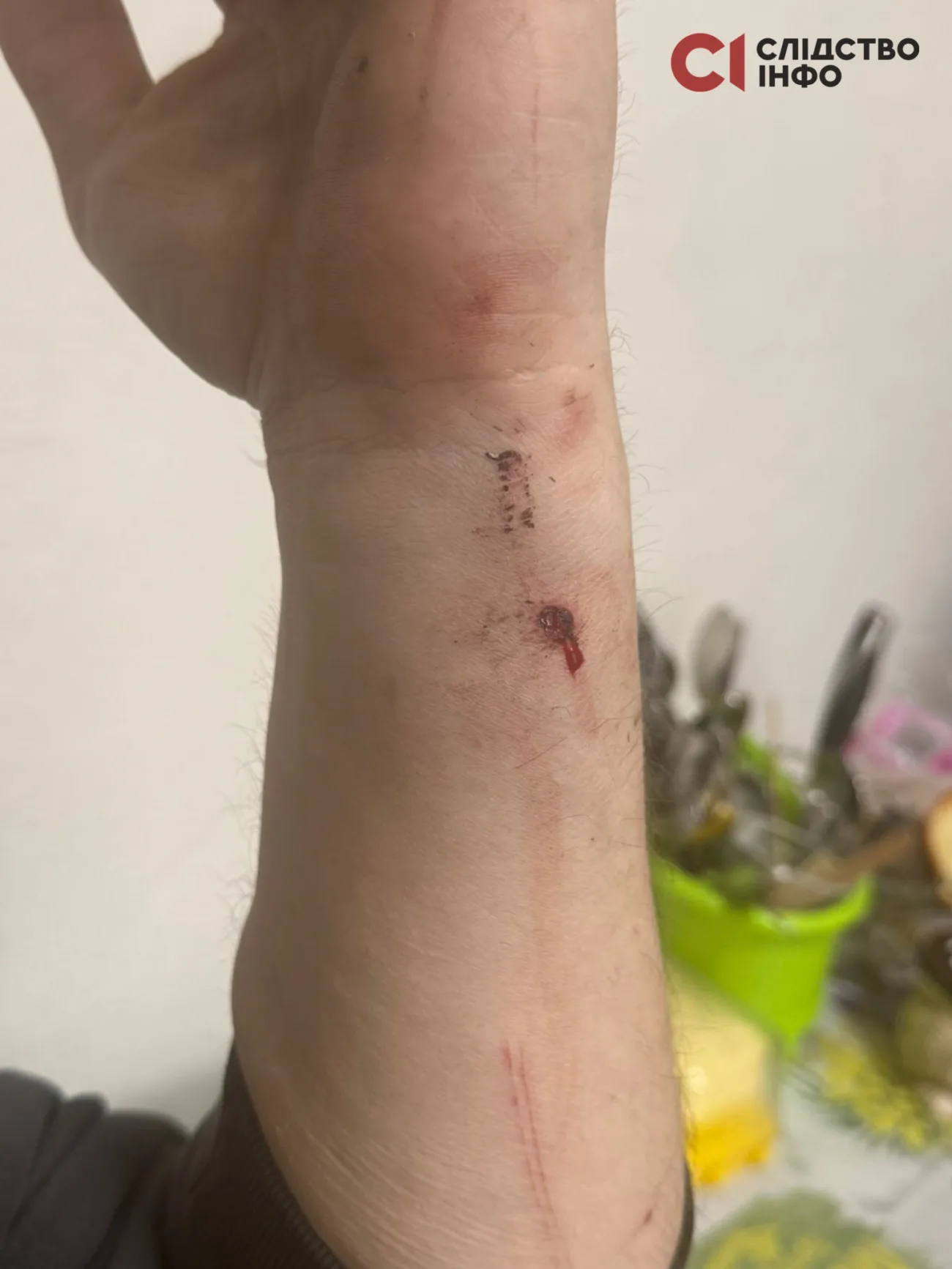
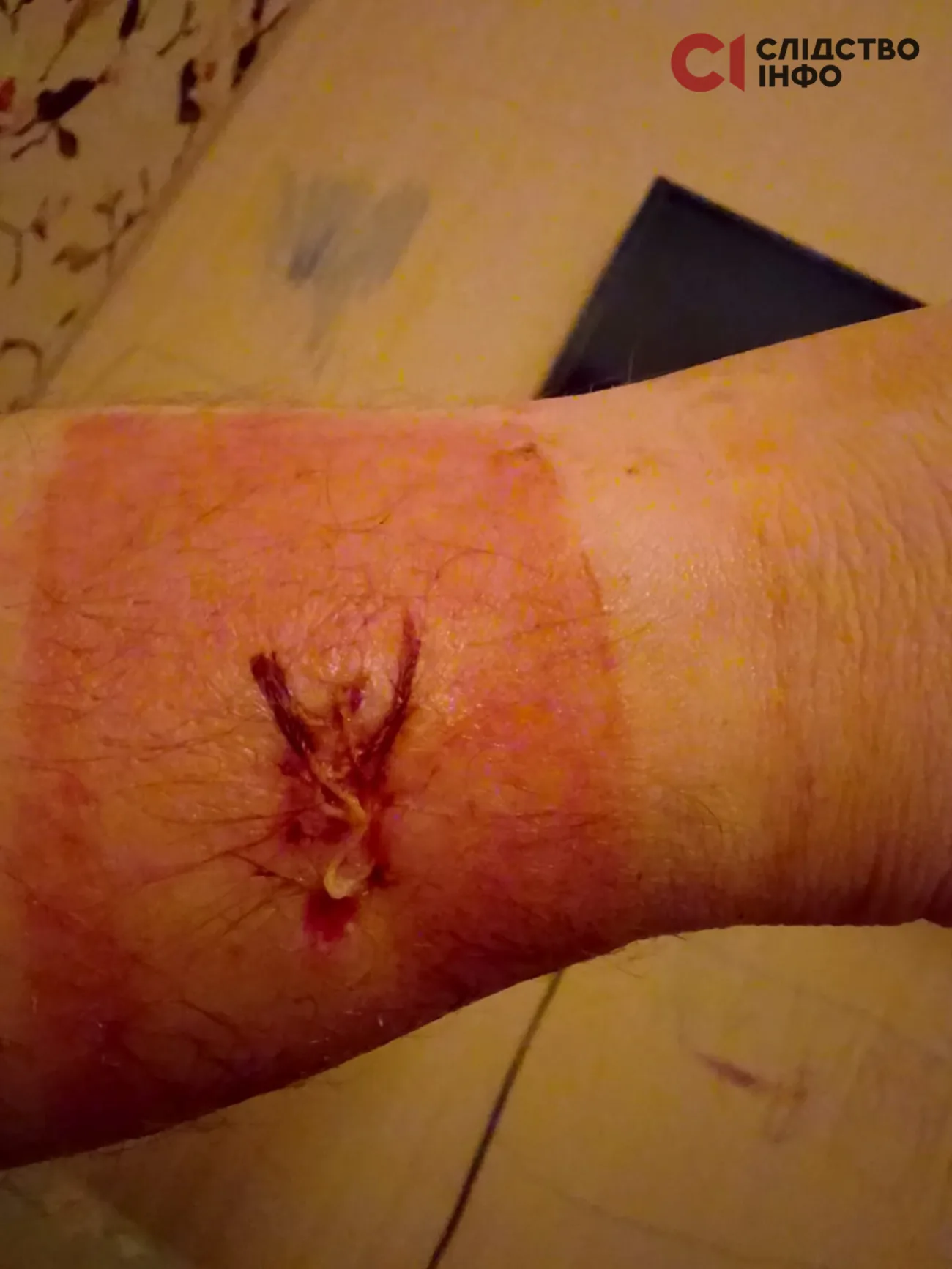
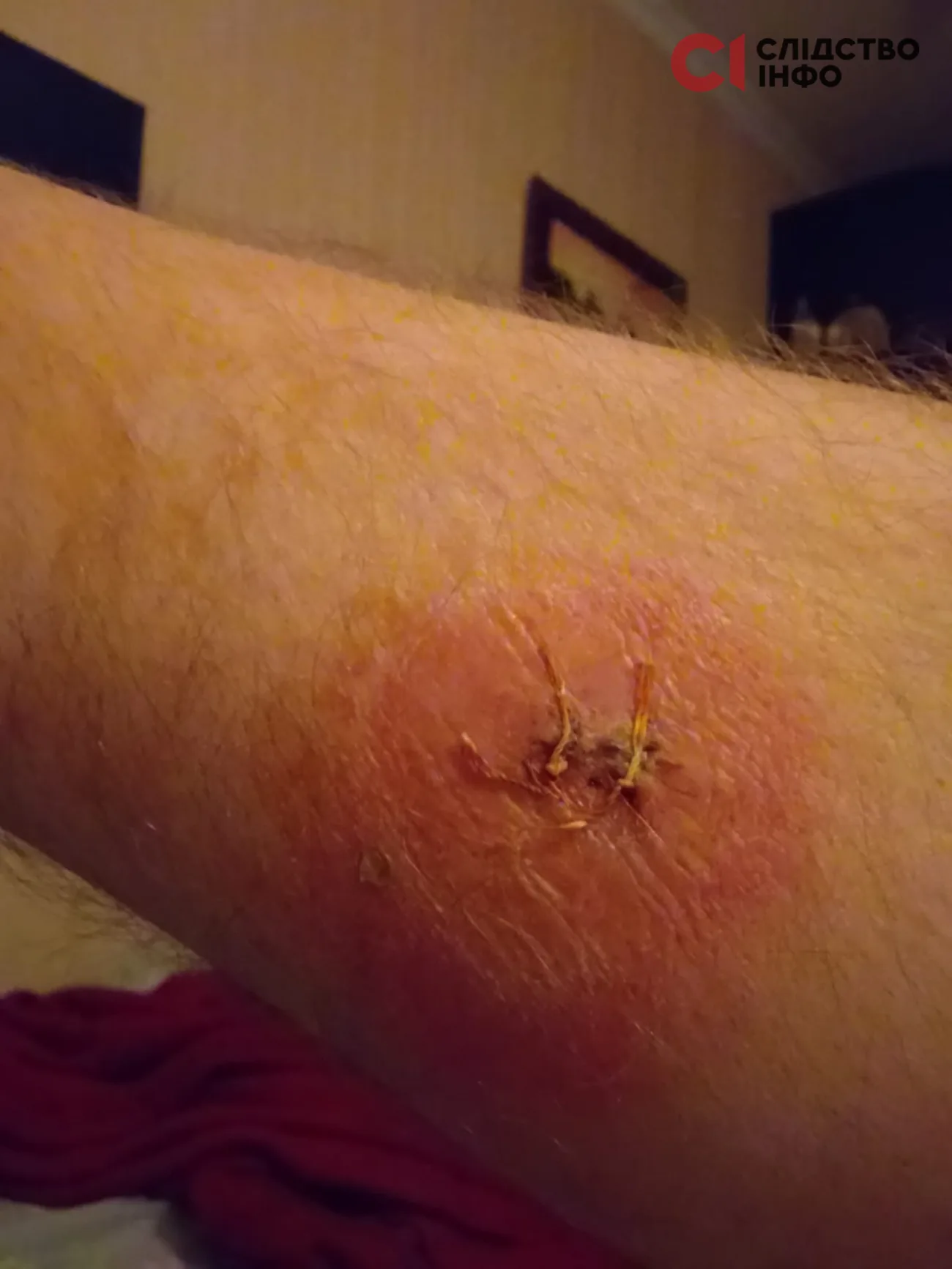
Arkadiy hid in that apartment from May 11 until the end of June. During that time, he called the Commissioner for the Protection of Soldier’s Rights and left an anonymous statement with the State Bureau of Investigation.
Commissioner Olha Reshetylova advised Arkadiy to transfer to another brigade through the reserve battalion. Later, Reshetylova confirmed to Slidstvo.Info that a conversation took place, during which she persuaded Arkadiy to contact law enforcement. She also offered him the chance to transfer to another military unit under her supervision, and Arkadiy promised to consider it and even began negotiating with one of the artillery divisions.
Arkadiy also reached out to the State Bureau of Investigation, sending them photos of his gunshot wounds on his arms and legs. In response, the SBI sent him a summons for unauthorized absence from service.
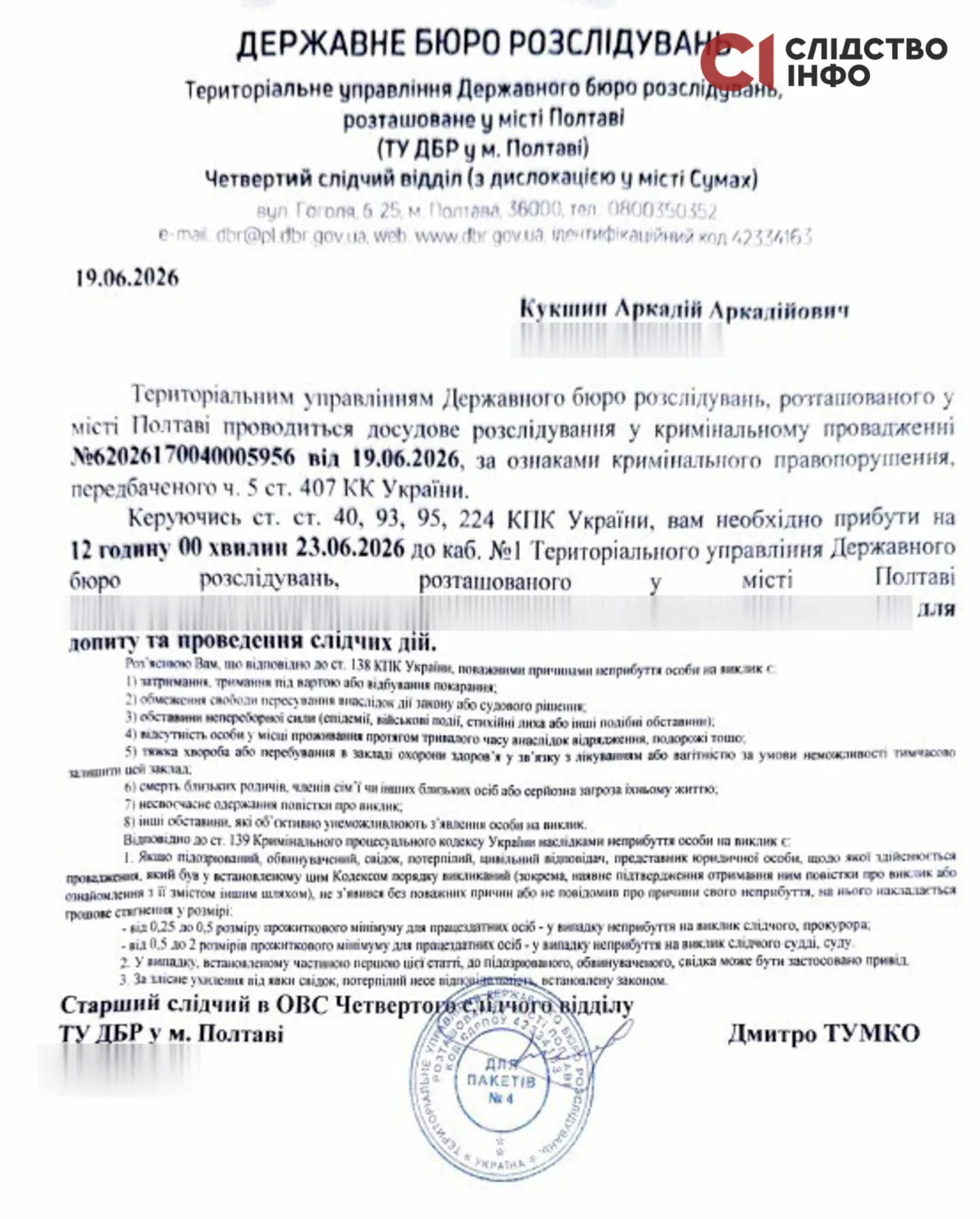
Police came to his wife’s apartment looking for Arkadiy. Law enforcement asked the woman whether people at work knew she was hiding a serviceman who had gone AWOL.
That is when the man changed his mind about contacting the police himself. Or about officially going to the hospital. He explains:
“The doctor will have to call the police because it is a gunshot wound. The police will see that I am now wanted for going AWOL, will call the Military Law Enforcement Service, and will send me either to the reserve battalion, from where I will again end up in Skelya, where they will kill me, or they will hand me over directly to Skelya, and they will kill me.”
On June 23, Arkadiy stopped responding, and he got back to Slidstvo.Info nine days later, on July 2, messaging from a different number. He explained that people had started hunting for him, and he’d been tailed—so he had to change his address and phone numbers.
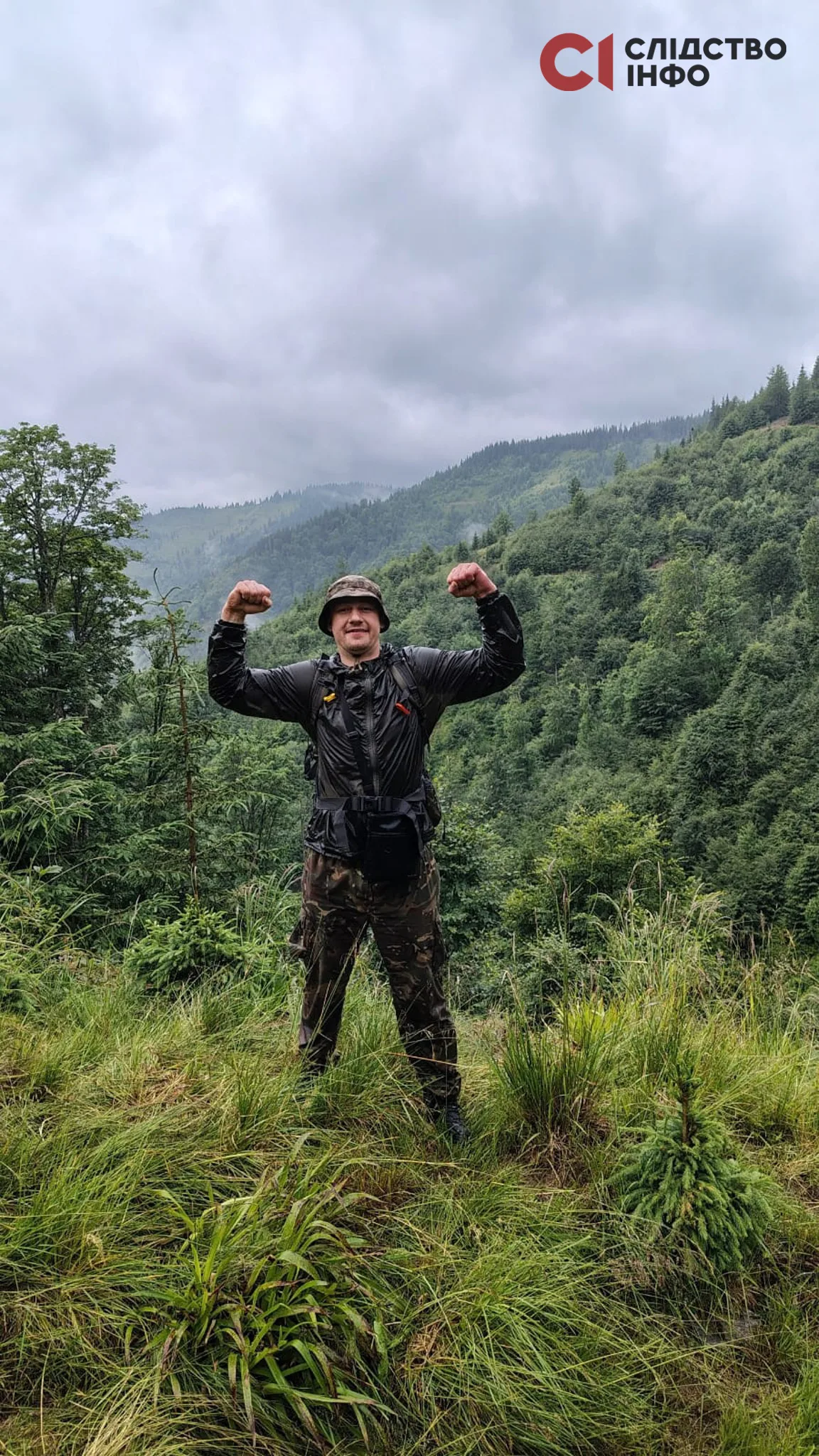
Ten days later, Arkadiy sent his photo against the backdrop of the Carpathians with the caption: “I got out.” In the end, he left the country illegally.
“I want to serve, just not with such scumbags.” The story of Yuriy
Усі висвітлені історії про катування та смерті в тилу в «Скелі» трапилися переважно цьогоріч. Але Юрій (ім’я змінене з міркувань безпеки, — ред.) служив у цьому штурмовому полку дев’ять місяців у 2024-му, п’ять із яких — на посаді інструктора. На полігоні підрозділу на Харківщині били і знущалися з людей уже тоді.
Юрія призвали до армії на строкову службу в 2020 році, коли йому було двадцять. До 2023-го був строковиком, а потім вирішив мобілізуватися. На початку 2024-го його відправили в «Скелю» — мовляв, там бракує людей.
Спочатку Юрій служив у Мирнограді, де слухав ворожі перехоплення. Але згодом його зробили інструктором на полігоні біля Ізюма на Харківщині. Він цій ідеї опирався: «Я казав, що я не бойовий. Чого я можу навчити? Я не хотів бути інструктором, але мене ніхто не питав».
Хлопець навчав переважно засуджених жінок і чоловіків, які мобілізувалися в «Скелю» з тюрми. За його словами, якось ці дівчата залицялися до медиків, і ті поскаржилися керівництву. Юрію наказали бити своїх підопічних-жінок.
«Я казав командиру: “Так точно” — ішов у бліндаж і просив дівчат сказати, ніби я їх побив, але насправді не робив цього», — згадує чоловік.
Одного разу Юрій навчав підопічних поводитися зі зброєю в окопі. Один із мобілізованих неправильно тримав автомат. Це побачив брат командира полігону (ім’я, фото, прізвище та позивний чоловіка є у розпорядженні редакції, як і ім’я і прізвище начальника полігону).
Він взяв автомат і вдарив мобілізованого прикладом в обличчя — вибив йому око. Постраждалого повезли в лікарню до Павлограда, звідки він повернувся з медичним висновком, ніби має поранення внаслідок мінно-вибухової травми.
Під час служби інструктором Юрій отримав «Золотий хрест» — нагороду за підписом Главкома Сирського.
All the highlighted stories of torture and deaths in the rear in Skelya occurred mostly this year. But Yuriy (name changed for security reasons — ed.) served in this assault regiment for nine months in 2024, five of them as an instructor. Beatings and abuse of people at the unit’s training ground in Kharkiv Oblast were already happening back then.
Yuriy was drafted into the army for compulsory service in 2020 when he was 20. Until 2023, he was a conscript, and then he decided to join up. At the beginning of 2024, he was sent to Skelya — supposedly because they were short on people.
At first, Yuriy served in Myrnohrad, where he listened to enemy intercepts. But later, he was made an instructor at the training ground near Izyum in Kharkiv Oblast. He resisted the idea: “I said that I have no combat experience. What can I teach? I did not want to be an instructor, but no one asked me.”
The young man mostly trained convicted women and men who were conscripted into Skelya from prison. According to him, once these girls flirted with medics, and they complained to the leadership. Yuriy was ordered to beat his female charges.
“I told the commander: ‘Yes, sir’ — and went to the dugout and asked the girls to say that I had beaten them, but in reality I did not do it,” he recalls.
Once, Yuriy was teaching his charges how to handle weapons in a trench. One of the conscipted soldiers was holding the rifle incorrectly. The brother of the training ground commander saw it (the man’s name, photo, last name, and call sign are at the newsroom’s disposal, as are the name and last name of the training ground chief).
He took the rifle and butt-stroked the conscipted soldier in the face — knocking out his eye. The victim was taken to the hospital in Pavlohrad, from where he returned with a medical report saying he had an injury from a mine-explosive trauma.
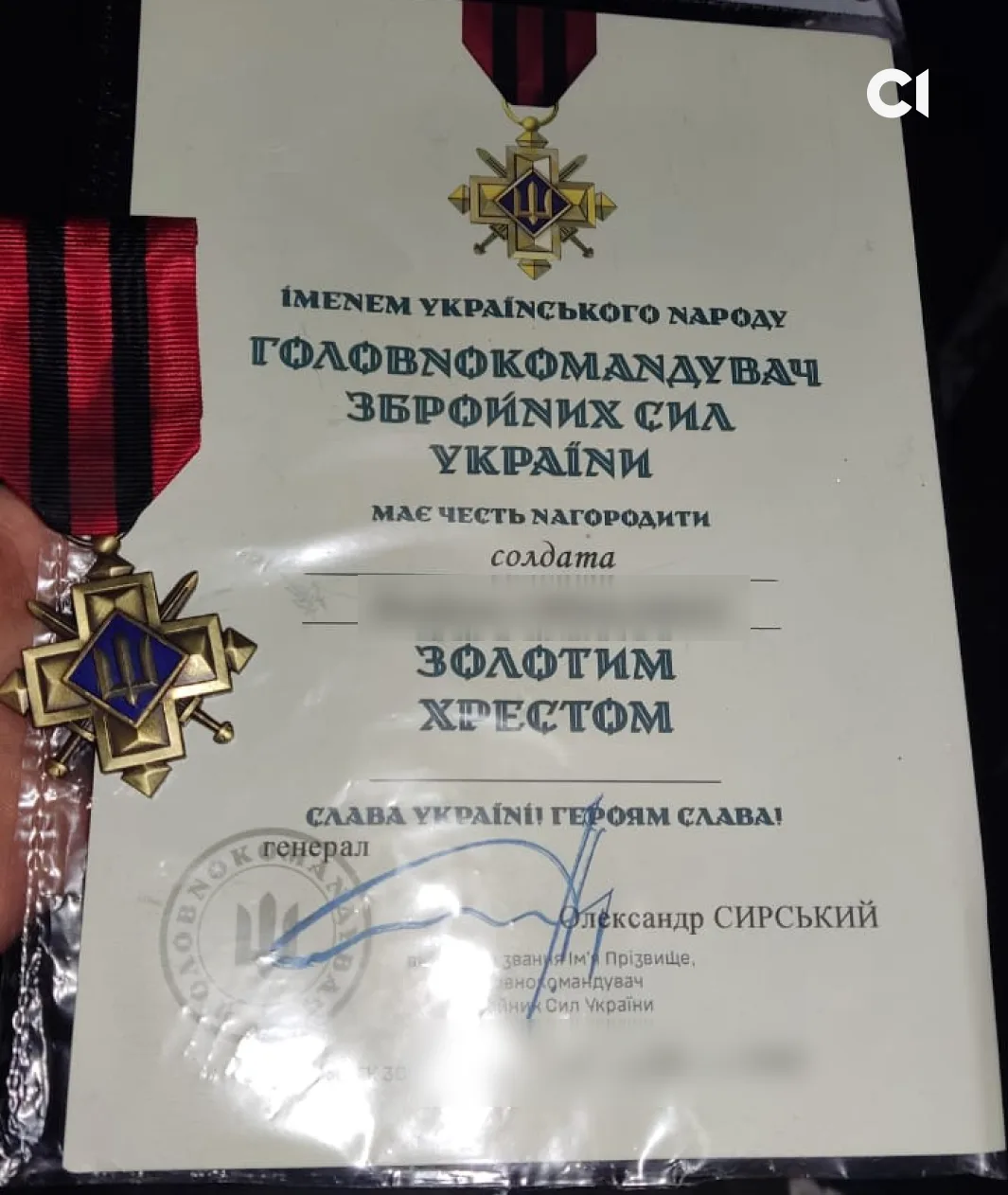
During his service as an instructor, Yuriy received the “Golden Cross” — an award signed by Commander-in-Chief Oleksandr Syrskyi.
He puts it bluntly, “Who the hell knows why I got it. Probably for my pretty eyes. I don’t think I deserve it.”
When the regiment commander, Yuriy Harkavyi (callsign “Skelya”), presented the award, Yuriy asked to be sent to the front. He was not satisfied with being an instructor. But the commander told him it “was not the right time.”
Harkavyi returned to the training ground on the eve of 2025. He loved showing the newcomers how to fire a grenade launcher. According to Yuriy, some of them made mistakes out of fear that their regiment commander was watching.
In the evening, in the instructors’ tent, the brother of the training ground commander “Zheka,” who was the senior instructor, began yelling at Yuriy that his charges had shot very poorly. Next thing Yuriy knew, he was on the floor. The senior instructor beat him on the head with a grenade launcher tube. He shattered Yuriy’s back teeth, giving him a brutal headache, and Yuriy blacked out. When he came to, he went to sleep in his own place. He slept for a day and a half, and then asked the training ground commander to let him go to the dentist because of the pain from the beating.
News outlet Babel mentioned Yevhen Harkusha and his brother in its article about other stories of servicemen going AWOL in Skelya.
Yuriy was allowed to leave the training ground, and he went to Cherkasy. He went to the Military Law Enforcement Service to transfer to another brigade. There, Yuriy was put in a cell. The next day, people from Skelya came to take him back. It turned out they had not put him on the wanted list.
Yuriy recalls: “The head of the Cherkasy Oblast Military Law Enforcement Service literally saved my life. I asked him, he listened to me — and did not hand me over to Skelya.”
After that, he was sent to the reserve battalion, where he stayed for four months without any monetary allowance. In April 2025, Yuriy asked for five days of leave at home in Dnipro to earn some money by repairing cars. Now he assumes that information about this was passed from the reserve battalion to Skelya, because on April 25, 2025, he was beaten.
“At home in Dnipro, I was walking with my wife to a store near our place, when the same brother of the training ground commander caught up to us in a car and told me, ‘Let’s go to the regiment commander,’” says Yuriy.
Yuriy started running, but the same brother of the Skelya training ground commander caught up to him and beat him up again. It all happened near a supermarket’s surveillance cameras. According to Yuriy, he and his wife asked for the footage from both the store and the police, but they were denied.
He filed a statement with both the police and the State Bureau of Investigation. More than a year has passed, but after the filed statements and documented injuries, the case about Yuriy’s two beatings by the same Skelya serviceman is not moving forward.
Yuriy was never called by law enforcement to give an explanation, and he was never asked to identify anyone.
According to information from sources in the police provided to Slidstvo.Info, proceedings on Yuriy’s statement were never opened.
After the second beating, Yuriy changed his place of residence, phone numbers, and decided not to return to the army until Skelya returned his military registration documents, which it never did, despite his service in the reserve battalion.
He asked that his name be changed because he is still worried about his own safety and his wife’s safety. Yuriy also fears that the Skelya training ground commanders will remain unpunished.
The Skelya training ground commander, Yevhen Harkusha, with the call sign “Zheka,” according to Slidstvo.Info information in the Armed Forces of Ukraine, beat a chaplain in May 2025, and only in July 2026 was he detained by the State Bureau of Investigation for it.
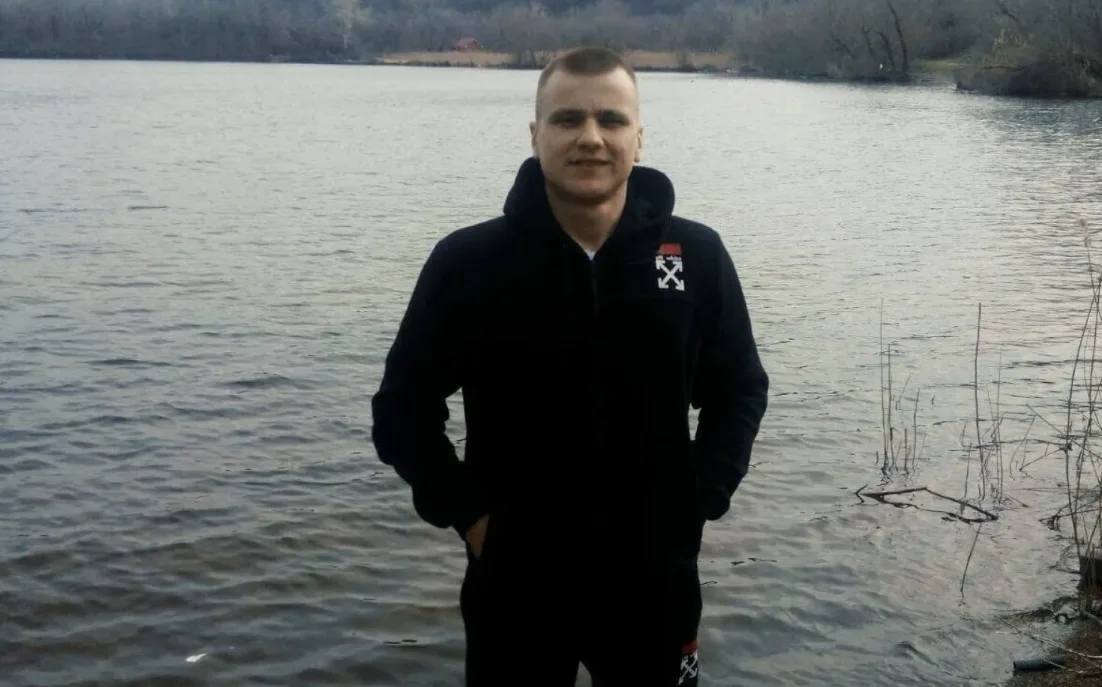
“In Skelya, everyone who flees from them is called a drug addict. When I was in Skelya, I only saw one actual drug addict. I want to make it clear: I am not a drug addict. I’ve never used drugs in my life, and I have a strong negative attitude toward them. I also want to continue serving in the military—but not with such scumbags,” he concludes.
On July 7, Slidstvo.Info sent a request to the Skelya command to obtain answers about the circumstances of Oleksandr Zavalov’s service and death, Arkadiy Kukshyn’s escape, and Maksym Cherevan’s detention. As of the publication of this article, the journalists have not received a response. Once they do, the outlet will publish it separately.