Journalists from the investigative outlet Slidstvo.Info have identified employees of the Sukhodilsk prison in Russian-occupied Luhansk Oblast whom freed Ukrainian prisoners accuse of involvement in systematic torture. Among those named is the facility’s deputy head, who has already been charged by Ukraine’s Security Service (SBU).
Prison staff allegedly subjected inmates to physical exhaustion, beatings, electric shocks, and denial of basic necessities — including food and medical care.
The findings are detailed in Slidstvo.Info’s report titled ‘When the body was carried out, they forced us to kneel’: A serviceman on those tortured in captivity.
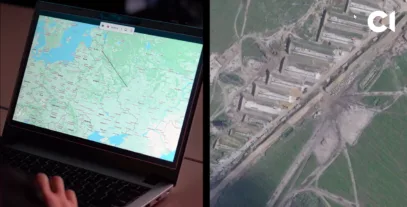
After Russian forces seized the area, the Sukhodilsk colony came under the control of the so-called “Luhansk People’s Republic” and was later reorganized by Russia into “Correctional Colony No. 4,” where Ukrainian prisoners of war were held. Freed captives have repeatedly reported routine beatings, electric torture, starvation, and lack of proper medical assistance.
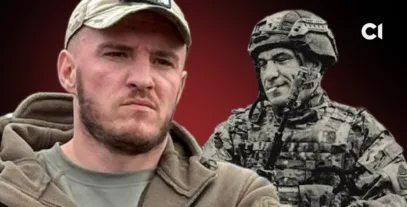
National Guard soldier Dmytro Sirenko, released after nearly three years in the facility, said he was wounded and unable to walk for some time but received no adequate treatment.

“When you do 500 to 1,500 squats in a short time, when you stand in an uncomfortable position for long periods, when you crawl in a single file for 500 meters back and forth … your legs stop working,” Sirenko told the outlet. “I understand that sport is healthy, but in moderation. When you are maximally exhausted and not fed properly, it simply destroys your joints.”
Sirenko said one of the prison’s leaders, whom he called “Kalivan,” was behind the abuse. Journalists identified him as Vitaliy Kartyshkov, deputy head of the institution.

Before 2014, Kartyshkov’s Odnoklassniki social media page featured photos from Ukrainian cities, including Kyiv, Berdyansk, and the Carpathian Mountains, as well as an image from Kolomyia in front of the world’s largest Easter egg monument.
From 2014 onward, after Russia seized parts of Luhansk Oblast, his posts shifted to support for Russia. His vacations now appear limited to Gelendzhik on Russia’s Black Sea coast in Krasnodar Krai.
In May 2025, Kartyshkov took part in an event in occupied Luhansk Oblast marking the 80th anniversary of Victory Day. In December of that year, he participated in a New Year’s “Tree of Wishes” campaign, removing children’s letters from a holiday tree and fulfilling their wishes.


According to the SBU, Kartyshkov has been charged with the cruel treatment of prisoners of war. Investigators allege that on his orders, inmates were beaten with rubber batons, forced to stand or run for hours in any weather, and tortured with electric current using wires connected through a field telephone.
In addition to Kartyshkov, Slidstvo.Info journalists identified three other Sukhodilsk prison employees who may be linked to the torture of Ukrainian prisoners of war.
With help from the hacker group KibOrg, the journalists obtained a full list of the colony’s staff. Sirenko recognized several individuals who, under Kartyshkov’s command, allegedly abused the captives.
One is Anton Maziukas, an operative from the operational department, originally from Luhansk.


Another is Roman Khainus, deputy head of the social, educational, and psychological work department. In 2025, the SBU charged him in absentia. According to investigators, he participated with other staff in beatings and torture of prisoners.


Khainus continues to appear in open sources, including public events in 2024–2025 in occupied Krasnodon (Sorokyne) in Luhansk Oblast.

A third identified individual is Leonid Rudenko. Social media pages suggest that he may have served in Ukraine’s State Border Guard Service before 2014.


After the occupation, according to investigators, Rudenko switched sides to work with the Russians and joined the prison administration along with other staff.


Sirenko also described a system of forced labor and food deprivation at the facility.
“The administration took part of our rations and gave them to those who worked,” he said. “The guys were hungry and went to work to get a little more to eat. Those who didn’t work essentially ate half as much.”
Sirenko separately recalled deaths among the prisoners.
“I witnessed it myself … One man died of cancer — they didn’t even let him call home to say goodbye. Another guy couldn’t take it and jumped out a window. Yet another died from complications of shrapnel in his lungs. In total, I know of at least four,” the serviceman said.