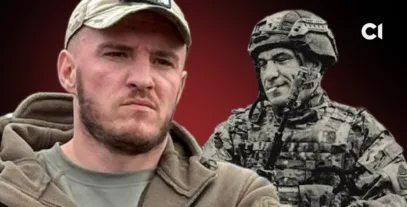
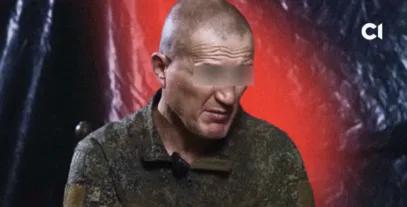
Oleksandr Kachkurkin was born in the Ukrainian Crimea. He was 14 years old when Russia occupied the peninsula and automatically recognized him as its citizen. After the start of Russia’s full-scale war against Ukraine, Oleksandr moved to Kazakhstan, where he worked in IT and donated to the Ukrainian Armed Forces.
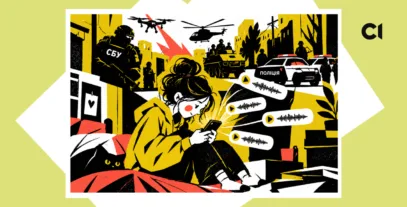
Because of two administrative offenses, a court in Almaty deported the man to Russia. According to Oleksandr’s mother, Svitlana, with whom Slidstvo.Info journalists spoke, her son was detained by FSB officers while still on Kazakh territory.
Oleksandr Kachkurkin was imprisoned in Moscow on treason charges. He faces life imprisonment.
In response to a request from Slidstvo.Info, Ukraine’s Foreign Ministry stated that it has no confirmation of Kachkurkin’s Ukrainian citizenship. This makes it impossible to return him from Russian imprisonment to his homeland.
After invading Ukraine in 2014, Russia began actively imposing its citizenship on people from the temporarily occupied territories. The first to face the consequences of this policy were residents of Crimea.
Russia automatically recognized all Ukrainian citizens and stateless persons who permanently resided on the peninsula as of March 18, 2014, as its own citizens.
According to the Media Initiative for Human Rights, because of obstacles created by the occupation authorities, only 3,247 Crimean residents were able to officially submit an application to renounce Russian citizenship.
Among the peninsula’s residents who were forcibly issued Russian passports in 2014 was Oleksandr Kachkurkin. Shortly before the occupation of Crimea, he had turned 14.
“In Russia, according to their laws, the first passport is issued at age 14, while in Ukraine, it used to be issued at 16. And at that time we no longer had the opportunity to obtain a Ukrainian passport at 16,” Oleksandr’s mother, Svitlana, told Slidstvo.Info journalists.
According to the woman, after Russia’s full-scale invasion of Ukraine in 2022, Oleksandr found work in the IT sector in Kazakhstan. He moved first, and later brought his family as well.
In that same year of 2022, Oleksandr made a large donation to support the Ukrainian army. “He truly cared about Ukraine with all his heart,” Svitlana said.
“Kazakhstan took part in the falsification of the criminal case”
The Kachkurkin family lived in Kazakhstan for more than three years. Oleksandr worked in information technology, in particular as a DevOps engineer, senior SRE engineer and head of an SRE engineering team. In addition, he collaborated with OpenAI.

According to Svitlana, several years after the move, the family began to be frequently summoned for checks at the migration service. There Oleksandr met one of the employees named Yakubzhan.
“He (Yakubzhan — ed.) wrote to Sasha: ‘You are an IT guy, help with the boss’s laptop.’ So Sasha helped. After that they went to his (the migration service employee’s — ed.) car and crossed the road in an unspecified place,” Svitlana recounted.
According to her, at that time the first administrative protocol was drawn up against Oleksandr under Part 1 of Article 615 of the Code of the Republic of Kazakhstan on Administrative Offenses (failure by pedestrians and other road users to comply with road safety requirements).
“Sasha thought it was just a joke: they recorded something and that was it. We did not attach any importance to it,” Svitlana said.
Later, according to Svitlana, Yakubzhan supposedly wanted to thank Oleksandr for helping with the boss’s laptop and invited him to lunch.
“I ask: ‘Where are you going to have lunch?’ Sasha says: ‘I do not even know where he will take me.’ Some time later he calls me from the migration service. He was detained for an administrative offense. It turned out they were sitting in a hookah lounge. And you cannot smoke hookah in a hookah lounge. You can outside, but not inside. Those are their laws,” Svitlana said.
She added that her son does not smoke at all. According to Svitlana, the hookah that day was smoked by the migration service employee Yakubzhan, but the administrative protocol under Part 1 of Article 441 of the Code of the Republic of Kazakhstan on Administrative Offenses was drawn up against Oleksandr.
“That was the second administrative offense. And since Sasha is a foreigner, two administrative offenses mean court,” Svitlana said.
According to the Code of the Republic of Kazakhstan on Administrative Offenses, both administrative offenses carried a penalty in the form of a fine — in the amount of two and 15 monthly calculation indices, respectively.
However, on January 29, 2026, the Bostandyk District Court in Almaty ordered Oleksandr Kachkurkin’s deportation from the Republic of Kazakhstan.
According to the court decision, a copy of which was seen by Slidstvo.Info, Oleksandr Kachkurkin was supposed to leave the country within three days. At the same time, according to his mother, Oleksandr did not return home after the court hearing.


“In court, they told me that he left the court with the migration officers. He left wearing just a T-shirt. He had on a thin jacket in winter. Around 10 p.m., he called me from an unknown number. Later, as it turned out, since he was flying with FSB officers, it was an FSB officer’s number,” Svitlana recounted.
She added that the head of the migration service claims Oleksandr went home of his own initiative.
Later, Svitlana learned that FSB officers met her son while still on Kazakh territory and flew with him to Moscow.
“We found an acquaintance in Moscow. He went to meet Sasha and stayed in touch with me the whole time. He told me that masked people led my son out (from the plane — ed.) under the arms, and they did not even let him approach,” Svitlana said.
Doctor of Political Sciences and expert at the Center for Civil Liberties, Mykhailo Savva, told Slidstvo.Info journalists that Kazakhstan and Russia falsified the case in order to convict Oleksandr Kachkurkin.
“Kazakhstan took part in the falsification of a criminal case against a citizen of the Russian Federation. Previously, Kazakhstan could extradite a person, but only when there were grounds. In this case, they handed over the person even though there were no grounds for it,” Savva said.
According to the expert, a foreigner can be deported from Kazakhstan only if he poses a threat to state security.
“This is absolutely illegal, from the point of view of Kazakhstan’s legislation as well. Because he (Oleksandr Kachkurkin — ed.) was not a threat to security,” Savva added.
He also emphasized that “no agreement between states gives the right to effectively violate the law,” so in this case, we’re talking about “secret, non-public, and illegal arrangements.”
Slidstvo.Info journalists sent a request for comment to the Ukrainian embassy in Kazakhstan, but have not yet received a response.
“It is all because of a computer game”
Oleksandr’s mother, Svitlana, believes that Russian special services began tracking her son in 2024 because of a denunciation by a Russian soldier.
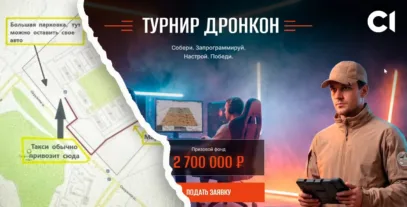
“They wrote a denunciation against him. And it is all because of a computer game,” she said.
According to Svitlana, Oleksandr had a conflict with a man who fought on Russia’s side against Ukraine.
“Sasha made modifications for some game that turned out to be popular. And that man had his own server. And Sasha did not allow his ‘mods’ to be used on that person’s server,” Svitlana said.
“If there is an order to beat out a confession at any cost — then anything Is possible”
On January 31, 2026, the Meshchansky District Court of Moscow chose for Oleksandr Kachkurkin a pre-trial restriction in the form of detention on charges of providing financial assistance to a foreign state and its representatives in activities directed against the security of the Russian Federation (Article 275 of the Criminal Code of the Russian Federation — treason).
The article provides for imprisonment of 12 to 20 years or life imprisonment.
“He was sent to Lefortovo. Not just to a pre-trial detention center, but to Lefortovo. At first, he was detained for two months. At the end of April, there was another court hearing, and the detention period was extended for another two months,” Oleksandr’s mother, Svitlana, said.
The Lefortovo pre-trial detention center is a facility in Moscow that is effectively subordinate to the FSB of Russia. It is intended for holding persons suspected or accused of committing serious and especially serious crimes. Lefortovo is considered one of the most closed pre-trial detention centers.
“In such detention facilities, the regime is very strict. As a rule, even meetings with relatives are not allowed. Lawyers go in, of course, but they are required to sign a nondisclosure agreement,” expert at the Center for Civil Liberties Mykhailo Savva said.
“But the regime there is well-established—there’s no arbitrary abuse by staff. If there’s no order to torture, people aren’t touched. But if the command is to extract a confession at any cost—then anything is possible,” he added.
According to Mykhailo Savva, “after ‘Lefortovo’ people receive huge sentences.”
“Since you are from Crimea, you have no right to Ukrainian citizenship”
Oleksandr Kachkurkin was born in Ukrainian Crimea in 2000. This is confirmed by a copy of the man’s birth certificate, which was seen by Slidstvo.Info.
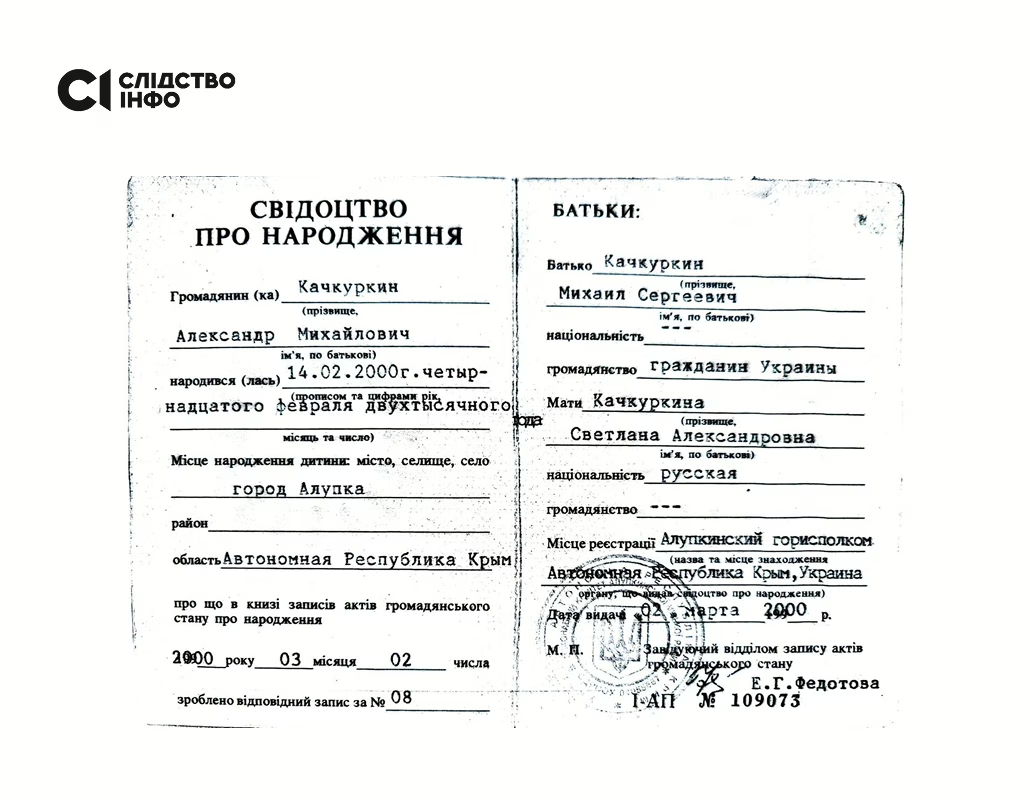
Slidstvo.Info journalists sent a request to Ukraine’s Foreign Ministry to find out whether Ukraine recognizes Oleksandr Kachkurkin as its citizen and whether the ministry sees possible ways to return him to his homeland.
The response states that the consular service department of the Foreign Ministry has not yet received confirmation of the presence of Ukrainian citizenship for Oleksandr Kachkurkin.
“The birth certificate is not listed in Article 5 of the Law of Ukraine ‘On Citizenship of Ukraine’ among the documents that confirm Ukrainian citizenship, and the grounds for acquiring Ukrainian citizenship are defined in Article 6 of the said Law,” the Foreign Ministry said.
At the same time, Article 6 of the Law “On Citizenship of Ukraine” states that Ukrainian citizenship is acquired, in particular, by birth, by territorial origin and by the fact of restoration in citizenship.
In April 2014, then-acting President of Ukraine Oleksandr Turchynov signed the Law “On Ensuring Rights and Freedoms of Citizens and the Legal Regime on the Temporarily Occupied Territory of Ukraine,” according to which “the forced automatic acquisition by citizens of Ukraine residing on the temporarily occupied territory of citizenship of the Russian Federation is not recognized by Ukraine and is not grounds for loss of Ukrainian citizenship.”
This law also establishes that any documents issued by occupation authorities are invalid and create no legal consequences.
According to Doctor of Political Sciences and expert at the Center for Civil Liberties Mykhailo Savva, Ukrainian citizenship is proven on the basis of the Unified State Demographic Register.
“It (the demographic register — ed.) began to be introduced in 2007. It started working much later. And it happened that there is no information about this person (Oleksandr Kachkurkin — ed.) in the register. Because when it was time to register him there as a citizen, he was in occupied Crimea. Ukraine had no access to his personal information. That is why they (the Foreign Ministry — ed.) did not confirm his Ukrainian citizenship,” Mykhailo Savva said.

According to the expert, Oleksandr Kachkurkin is currently not a citizen of Ukraine: “He is a person who has the right to citizenship.”
In response to a request from Slidstvo.Info, the Foreign Ministry also noted that Oleksandr Kachkurkin never applied to the Ukrainian embassy in Kazakhstan, including regarding the processing of Ukrainian passport documents.
At the same time, Oleksandr’s mother, Svitlana, claims that in 2022 her son called the Ukrainian embassy in Kazakhstan to find out what was required to obtain Ukrainian documents.
“There (at the Ukrainian embassy in Kazakhstan — ed.), a woman answered rudely. She said that since you are from Crimea, you have no right to Ukrainian citizenship at all. And in general, you are a traitor. That is exactly what was said,” Svitlana recounted.
Expert at the Center for Civil Liberties Savva explained: “I think that this appeal was not recorded in any way. He did not apply with documents. He did not receive confirmations that he had appealed.”
The Foreign Ministry also informed Slidstvo.Info that Oleksandr Kachkurkin was deported from Kazakhstan on the basis of a court decision of that state as a citizen of the Russian Federation, and during the war, the man traveled to Russia. It concerns the DevOpsConf 2024 conference, which Kachkurkin attended in Moscow.
At the same time, the ministry noted that “the severance of diplomatic relations with Russia and the cessation of the functioning of foreign diplomatic missions in the Russian Federation currently makes it impossible to use consular mechanisms to protect the rights of Ukrainian citizens on the territory of the aggressor state.”
According to Mykhailo Savva, the process of recognizing Oleksandr Kachkurkin’s Ukrainian citizenship may be very complicated: “There is a certain procedure that needs to be followed. And it is very complicated because Ukrainian legislation, until the end of martial law and for another year after it, prohibits even accepting documents for consideration of the issue of Ukrainian citizenship from citizens of the Russian Federation.”
The expert added that the status of a Ukrainian citizen could give Oleksandr a chance to return to his homeland through the mechanisms of mutual return of persons.
According to the head of the Board of the Crimean Tatar Resource Center, Eskender Bariiev, as of April 30, 2026, since the occupation of Crimea, Ukraine has managed to return only 12 civilian Crimean political prisoners from Russian detention facilities, four of them after the start of the full-scale war.