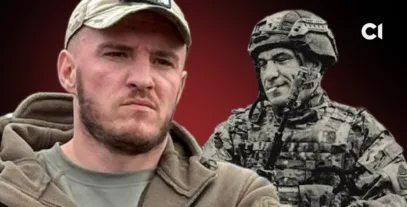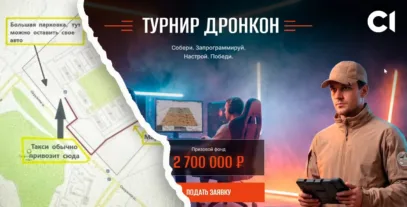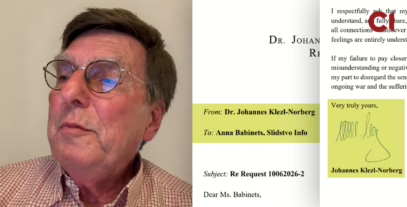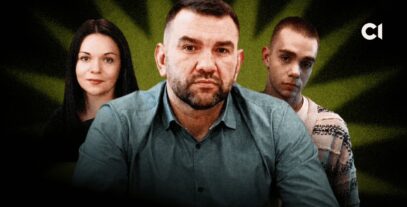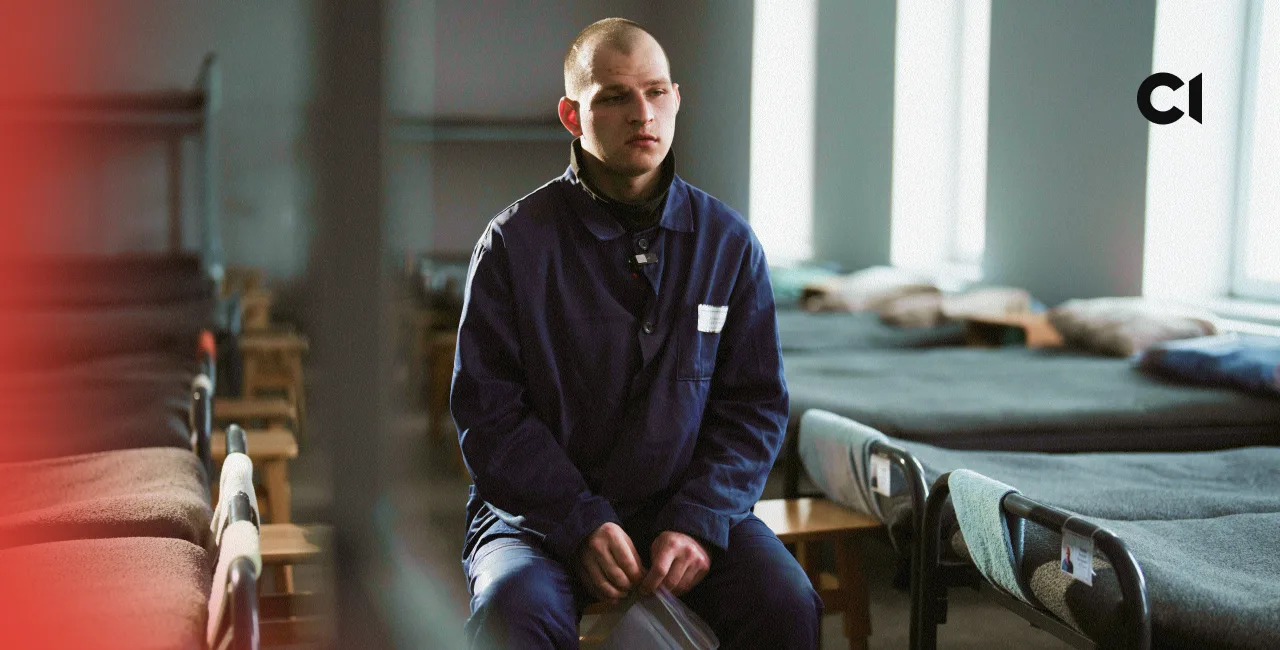
Men in Ukraine’s occupied territories are forced to join the Russian army — through pressure, blackmail, and fabricated cases. 22-year-old Ivan Vikhariev from Zaporizhzhia Oblast signed a contract in pre-trial detention after being told: “You have two choices — either serve time in jail or go fight.” He chose to fight and ended up on the front line, and later in Ukrainian captivity. Now he is being tried for state treason.
Slidstvo.Info journalists spoke with the prisoner of war, obtained data from closed databases, and analyzed hundreds of names of employees in the so-called “military enlistment offices” in occupied territories.
According to Ukraine’s Security Service (SBU), tens of thousands of Ukrainians were illegally conscripted. The Coordination Headquarters says that about 15 percent of prisoners of war ended up in the Russian army from temporarily occupied territories.
This is another episode in the system of war crimes that Russia commits in Ukraine, Slidstvo.Info found.
“I CHOSE TO FIGHT”: HOW A UKRAINIAN ENDED UP IN THE RUSSIAN ARMY
Ivan Vikhariev has been in a prisoner-of-war camp for a year already. He first became known from a video by Ukrainian paratroopers who, together with adjacent units, captured 21 Russian army servicemen in Kursk Oblast. At that point, Vikhariev identified himself, stating he was born in 2003, from the settlement of Mykhailivka in Zaporizhzhia Oblast, and served in the 34th group — beyond that, he claims to remember nothing.
Slidstvo.Info visited the camp to learn firsthand how a Ukrainian ended up serving in the Russian army. Watching footage of his own capture, Vikhariev says he was terrified at the time.

He says he completed nine years of school and a vocational college with a specialty in tractor operation. The full-scale invasion caught him at home:
“In 2022, the columns rolled in. At first, everything was fine. We had this neighbor — how should I put it — a fool. He went out into the street, welded sharp ‘hedgehogs’ from rebar, scattered planks around, and covered the hedgehogs with straw so no one could drive through.”
“Why do you call him a fool?”
“Well, because… we immediately ran over to where he’d scattered them. All the neighbors gathered and simply tossed the planks back into his yard,” recounts POW Vikhariev.
After the Russian columns passed through, he says, “everything went back to normal.” Locals quickly began socializing with Russian soldiers, and Ivan was no exception.
“Even the girls hang out with them, chat — everything’s fine. The soldiers bring them flowers. To be honest, my mother is also talking to a Russian serviceman. My father just doesn’t know. And my sister is already pregnant by another soldier. They live together, it’s normal. I used to hang out with them too. We’d drink beer and whatever else we could get our hands on,” recalls Ivan Vikhariev.
He was later detained by the Russians on suspicion of theft.

“They wanted to convict me, but I didn’t get prison time. I just didn’t want to end up in jail. And the state lawyer told me straight up: ‘You’ve got two choices—either serve time in jail or go fight.’ So I chose to fight,” the prisoner says.
When asked how he explains his decision, he answers after a pause: “Well, how to put it… [Wanted] to earn decent money. Come back, buy a good house. A car.”
The Coordination Headquarters for the Treatment of Prisoners of War says such cases are far from rare. Spokesperson Petro Yatsenko explains that describing these situations as a “voluntary choice” is difficult: “Often, these people don’t realize that their so-called choice was shaped by the constraints imposed on them by the Russian occupation authorities. They exist within a framework where their decisions may feel natural and their own. But in reality, they are not.“
Since the beginning of the full-scale invasion, Ukraine’s Security Service (SBU) investigators have been investigating more than 100 thousand war crimes committed by the Russian Federation in Ukraine, according to a response to a request from Slidstvo.Info. Among them is forced conscription in occupied territories.
The SBU notes: “The occupiers exert psychological pressure on men of conscription age, coercing them into obtaining ‘Russian citizenship’ and then signing a military contract under threat of arrest, property confiscation, dismissal from work, or deportation. It is not uncommon for individuals to be detained on fabricated charges and then offered ‘release’ on the condition they sign a contract.“
Vikhariev himself says he signed the documents while in a pretrial detention facility.
“A military commissar came to me from Melitopol. I signed. Then he said, ‘I’ll be back in a couple of days, and we’ll sort out your passport.’ I went through the medical commission in handcuffs. The next day, they called me in — the commissar showed up, took care of all the paperwork,’” says Ivan Vikhariev.
In the temporarily occupied territories, Russia has been running a recruitment campaign for its army since as early as 2014, accompanied by propaganda, forced passportization, unlawful searches, and arbitrary detentions.
“WE GOT SCREWED OVER, OF COURSE”
During the conversation, Vikhariev admits that the promised conditions of service bore little resemblance to reality.
“Do you realize that Russia essentially blackmailed you into joining the army?”
He shrugs and steers the conversation toward money: “Well, to be honest, I figured it out… Half of the promised payments never came through. They promised 800,000 rubles ($10,304) upfront, as a lump sum. They transferred 195,000 rubles ($2,512) plus another 20,000 rubles ($258) — the so-called ‘Putin payments.’ The guys said more was supposed to come. I kept checking — nothing ever arrived.”

He says that before being sent to positions near Kursk, they were not issued full equipment: “They told us to head straight to the front line, to the village of Pogrebki in Kursk Oblast. They didn’t give us waders. They issued uniforms, then took them back. Well… we got screwed over, obviously. There’s no denying.”
After signing the contract, Vikhariev was taken from Melitopol to Mariupol for training. From there, he was sent to Kursk Oblast. A Ukrainian man, conscripted by the Russian authorities, ended up being sent to “liberate” Russian territory:
“We arrived in Kursk. We were in some village. There we also trained on motorcycles.”
“Fighting on motorcycles?”
“Well, yes, it’s a motorized rifle unit. They dropped us off at some dark house. We were trying to figure out which way to go, where our rally point was.”
“Didn’t you have a radio, some way to communicate?”
“We lost the radio.”
Vikhariev says they set up their positions on the spot. That is also where they celebrated New Year’s: “We found two three-liter bottles of moonshine. Drank them. Caught some chicken, quickly butchered it. The house was already destroyed — so we just grilled meat inside. Had a decent New Year’s, all things considered.”
Later, he says, a message came over the radio that “Koreans were coming”: “They told us: if you can’t tell who it is, shout ‘Red-and-White’ or ‘Rus.’ So we shouted. Eventually they started pelting us with grenades. Disposable ones. They’re reckless — they don’t care whether you’re Russian or Ukrainian. I was the only one left alive and in one piece.”
According to Vikhariev, his capture was accidental: “I went looking for something to eat. I look up and see three Ukrainians standing there. I think to myself: that’s it, I’m done. I walked over and asked: ‘Hey guys, got a smoke?’ Zero reaction. I asked again. Then one of the older ones says: ‘Come on in.'”
WHO WORKS IN THE “MILITARY ENLISTMENT OFFICES” IN TEMPORARILY OCCUPIED TERRITORIES
According to Ukraine’s Security Service, the occupation authorities have already illegally conscripted tens of thousands of Ukrainians.
After the start of the full-scale invasion, Russia created so-called “military enlistment offices” in the newly occupied parts of the Zaporizhzhia and Kherson oblasts, which compile lists of men of conscription age and prepare for conscription.
At the end of 2024, these bodies began actively compiling lists of those who could be forcibly conscripted or forced to sign a contract.
Slidstvo.Info, together with search volunteers from the organization KibOrg, obtained information about employees of these institutions. Journalists analyzed hundreds of names and identified the leaders among them.
Oksana Iordakiy heads the department of social and pension provision at the military enlistment office in Donetsk. She hails from Kramatorsk, and her son was probably posthumously awarded a medal “for the liberation of Mariupol.”


Nikita Ponomaryov is a 23-year-old head of the secret part of the military enlistment office in Manhush, Donetsk Oblast. He himself is from a village in Russia’s Belgorod Oblast.

Nataliya Davydenko manages the department of social and pension provision in Snizhne, Donetsk Oblast. In November 2024, she participated in an outreach reception for participants of the so-called “special military operation” and families of the dead.


Olena Pryzerovska works in Henichesk. Before Russia’s full-scale invasion, she was a lawyer at the Russian Justice Ministry’s office in Crimea.

Mykhailo Prenko, who moved from Crimea to Kherson Oblast, serves as an assistant in the department for the assignment and accounting of conscription resources.

At the Melitopol military enlistment office—the same office that formalized Vikhariev’s conscription—Svitlana Dmitriyeva works as the senior assistant to the head of the department for citizen preparation and conscription.

In Berdyansk, Salavat Fakhrutdinov oversees conscription resources. According to publicly available data, before the full-scale invasion, he worked as a videographer, filming weddings, anniversaries, and graduations.

“To date, 28 criminal proceedings have been opened in connection with forced conscription in the occupied territories. 22 individuals have been charged, and indictments against 16 have been referred to court. Two convictions have already entered into legal force. Among those implicated are employees of the so-called military enlistment offices,” says Taras Semkiv, head of the Department for Countering Crimes Committed in Armed Conflict Conditions at the Office of the Prosecutor General.
“UNUSUAL TO FIGHT AGAINST ONE’S OWN”
“If you had a weapon, would you kill Ukrainians?”
“No.”
“But you signed a contract with the Russian army. Essentially — to fight against your own.”
“Well… yes, that is how it is. My sister lives in Zaporizhzhia. She said, ‘Do not do this, do not go fight. Even if they give a passport, even if they hand a summons.’ I did not listen.”
“What is it like to fight against your own country?”
“Unusual to fight against one’s own.”

Vikhariev may be handed over to Russia as part of an exchange if it claims him. Human rights defenders note that after returning from captivity, such people are often sent back to the front.
“Do you feel like a traitor?”
“Yes.”
“What does this word mean to you?”
“Betrayed my own. Went to fight against my own.”
“And what conclusions have you drawn from this?”
“I know that I will serve time for all this. Maybe there won’t be any exchange at all. I don’t know… I wish I had just left that territory — that’s all.”