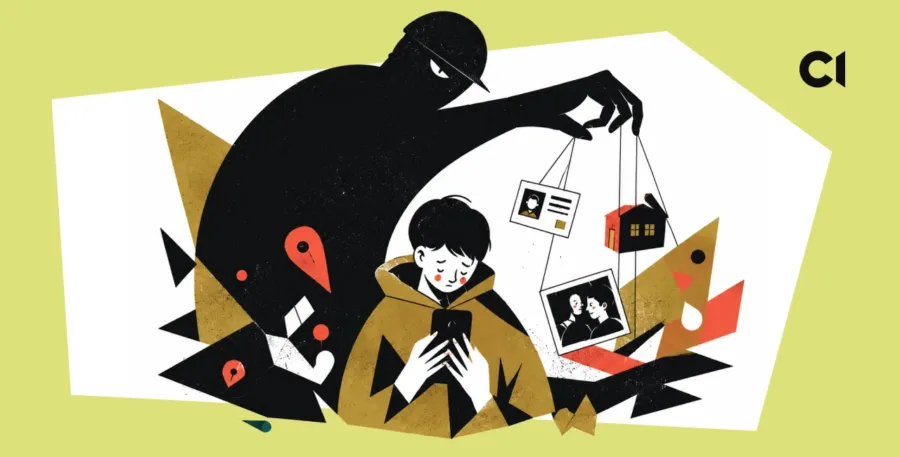
Russian security services recruiting Ukrainian children to carry out acts of sabotage and terrorist attacks do more than simply promise them ‘easy money’. When minors try to back out of a task, their Russian handlers resort to pressure and blackmail. Viktoriia Chalova, head of the Juvenile Prevention Department of the National Police in Odesa region, spoke to a Slidstvo.Info journalist about the methods they use.
According to Chalova, Russian security services now use a range of platforms to find people willing to carry out acts of sabotage and terrorist attacks. Initially, they targeted Telegram channels where people looked for work, but they now also recruit through online games, TikTok, Instagram and other platforms. Minors are initially given simple tasks, such as spraying graffiti or putting up leaflets. They are then given increasingly serious assignments.

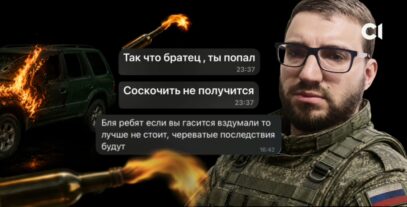
According to Chalova, at this stage children often do not even realise that they are already carrying out tasks for the Russian security services. When they begin to understand what is happening, they often try to back out, at which point their handlers resort to psychological pressure.
She explains: ‘The handlers blackmail them using their parents, friends and acquaintances. Sometimes a child feels they simply have no way out. But I can say one thing for certain: all the children who have been detained admit what they have done and say that, if someone had warned them about this earlier, they would never have done it.’

Chalova added that Russian security services psychologically manipulate children, particularly younger ones, while gathering as much information about them as possible. During their conversations, children disclose personal details, such as where they go to school. In other words, the handlers deliberately steer the conversation in ways that allow them to collect as much information as possible.

‘Gradually, as they gather more and more information, the child reveals personal details during their conversations, including where they go to school. So it isn’t simply a transactional conversation along the lines of: “Do this and you’ll get paid.” These people deliberately try to find out as much as they possibly can about the child,’ Chalova explains.
Recruiters sometimes blackmail teenagers by threatening to turn them in to the Ukraine Security Service (SBU). This was one of the tactics used by Main Intelligence Directorate (GRU) officer Artem Shmul when recruiting teenagers in Odesa.
‘That’s when the blackmail starts: “I have our messages and your personal details. I’ll send screenshots of our conversations and our messages to law enforcement — they’ll come for you, your parents will find out, your school will find out, everyone will find out,”’ Chalova says.
At the same time, recruiters reassure children that they will face no consequences for committing a serious offence because they are minors.
Chalova adds that, compared with 2023, the number of offences committed by minors has been falling. She attributes this in part to preventive work and to children themselves becoming more aware of the risks and reporting recruitment attempts.
Once a child has been sentenced and the court’s decision reaches the police, juvenile prevention officers begin working with them. The child is placed on a preventive supervision register and receives individual support, including participation in civic and patriotic initiatives and sporting activities, as well as help with socialisation.
According to Chalova, this work is also important because many of the children targeted by recruiters have small social circles and need support: ‘In most cases, children who commit these offences have a very small circle of like-minded peers and friends. We need to show them that there are many people who can support them.’

Juvenile prevention officers also teach children about online safety, including how to adjust their privacy settings on social media so that only people in their contacts can message them. According to Chalova, most children change their behaviour for the better after taking part in preventive programmes.
‘Children who choose to make a change generally stay firmly on that path, regardless of the particular type of support they receive,’ Chalova says.