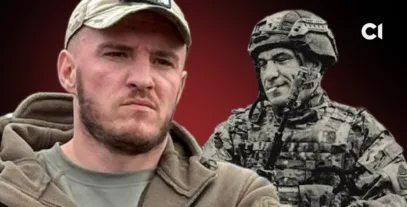
The schoolgirl monitored Ukrainian military personnel and police officers, photographed military equipment and air-defence systems, and was eventually instructed to place a grenade under a vehicle. According to investigators, the Russians recruited the minor through Telegram.
In August 2026, Russian serviceman Nikita Zorin was formally notified of suspicion in absentia in connection with the case. The girl, meanwhile, was convicted. A Slidstvo.Info journalist examined the case materials and found out how the Russian serviceman drew the minor into an intelligence network and what sentence she received.
A Pen Pal
In the autumn of 2025, 15-year-old Alina from Kramatorsk received a message from a man she did not know. He had found her contact details in a channel for dating and finding easy ways to make money. According to investigators, the man was Nikita Zorin (“Zarya”). He is a Russian serviceman who initially served under contract with the 16th Engineer-Sapper Regiment. Later, as a private, he transferred to the “Rykari” assault detachment of the 237th Tank Regiment.
Zorin, who was ten years older than Alina, messaged her constantly, took an interest in her life, and gradually gained her trust. After some time, he asked the schoolgirl to monitor Ukrainian military personnel and law-enforcement officers in Kramatorsk and report to him where they gathered, what vehicles they drove, and where military equipment was kept.
Alina told the man about the ‘Bastion’ grocery store on Oleksy Tykhoho Street. She had noticed that Ukrainian soldiers gathered there in the evenings. A few days later, she sent him information about the location of military personnel and ammunition on another street, Ivana Syly Street.
Later, Alina told Zorin that she had spotted police officers and parked police vehicles on Marii Prymachenko Street.

In early December, Zorin instructed Alina to go to Ivana Syly Street again. From there, she passed on new information about nearby military personnel, equipment, and vehicles. The girl then spent almost an entire day gathering information about air-defence systems. She left home several times to carry out assignments and, when she returned, recorded voice messages for Zorin.
The schoolgirl passed information to the Russian serviceman for several months. Eventually, he warned Alina that Russian forces might strike the locations she had provided. He also demanded that she tell no one about their communication and show no one their messages.
Later, Zorin’s previously friendly tone changed. He began threatening Alina with physical violence. According to prosecutors, he instructed her to place a grenade under the wheel of a military vehicle and photograph it. The girl refused, but continued sending him information about the locations of Ukrainian military personnel.
The Schoolgirl’s Fate
On 5 January 2026, Alina returned home to prepare another “report” for her handler. Officers from the Security Service of Ukraine (SBU) were waiting for her at the flat. During a search, law enforcement officers seized her smartphone.
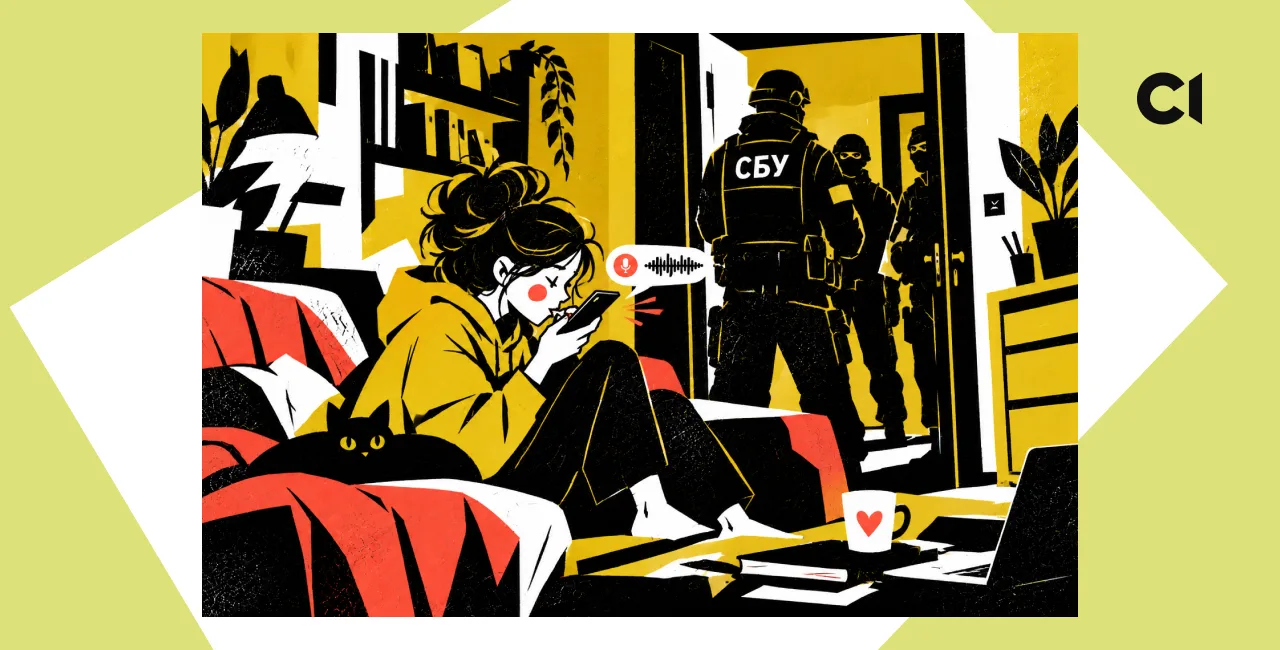
That same day, Alina was detained and notified that she was suspected of high treason. Two days later, the Sobornyi District Court of Dnipro remanded her in custody until 5 March, setting bail at UAH 266,000. Alina and her mother said they could not afford it. Alina spent the following months of the pre-trial investigation at Dnipro Penitentiary Institution No. 4, a pre-trial detention centre.
At the time, Alina explained that she had passed information to the Russian serviceman because she wanted revenge on members of the Ukrainian Armed Forces who had allegedly treated her badly. She expected Zorin to ‘punish’ them. Alina did not specify what exactly the servicemen had allegedly done. She later refused to give any further evidence against herself.
The girl also said that her handler had promised to pay her into a cryptocurrency wallet. However, she did not know how to use it and therefore never received any payment. At the same time, she described herself as patriotic and said that she loved Ukraine.
Her lawyer sought to have Alina released from custody, but on 2 March the Dnipro Court of Appeal dismissed the appeal. The prosecution subsequently applied to the court for her pre-trial detention to be extended by another month, arguing that there was a risk that she might abscond, including by fleeing to temporarily occupied territory, or continue passing information to the Russians.
Her lawyer asked the court to release the schoolgirl into round-the-clock house arrest at her home in Kramatorsk. He noted that Alina was a minor with no previous convictions, lived with her parents and younger brother, and that her father was serving in the Armed Forces of Ukraine.
Alina told the court that she had suffered from bronchial asthma since the age of 13 and had undergone an appendectomy while in pre-trial detention.
Ultimately, the court ordered that Alina remain in pre-trial detention until April 2026 and left the amount of bail unchanged. At the same time, it ordered the management of the pre-trial detention facility to arrange an urgent medical examination and, if necessary, provide her with appropriate treatment.
In April, the SBU announced that it had completed its pre-trial investigation and referred the indictment to the court. The girl was ultimately convicted of high treason and sentenced to six years’ imprisonment.
Criminal liability for high treason applies from the age of 16, lawyer Hanna Litvishchenko explains. A person must have reached that age at the time the offence was committed, rather than at the time of their arrest or during subsequent proceedings by law enforcement agencies and the courts. This means that Alina was 15 when Zorin first began communicating with her, but had already turned 16 by the time she carried out the tasks described by investigators.
At the same time, the expert explained that the girl can simultaneously be a defendant in one set of criminal proceedings and a victim in another:
‘A person remains a child until the age of 18. The fact that, after turning 16, the girl may have committed acts that the court classified as high treason does not in itself preclude a separate assessment under criminal law of the actions of the adult Russian serviceman who, according to investigators, recruited and exploited her.’
Following Alina’s detention, law enforcement authorities therefore continued a separate investigation into the actions of her handler.
The Case Against Zorin
On 6 August 2026, Nikita Zorin was formally notified in absentia that he was suspected of an offence under Article 438(1) of the Criminal Code of Ukraine — recruiting and using a child to participate in an armed conflict. If convicted, Zorin faces between eight and twelve years’ imprisonment.
His current whereabouts, however, are unknown. The most recent mention of Zorin in publicly available sources dates from November 2024. In a Russian Telegram channel where relatives post appeals seeking information about missing Russian servicemen, a woman who identified herself as his mother asked for help finding her son.
She said that the last time he had been in contact was on 27 October 2024, his birthday. Afterwards, his relatives sent him messages on Telegram and VKontakte. The messages were read by someone, but no replies were received. According to the woman, at the time Zorin had not officially been designated as missing, killed in action or a prisoner of war.
Nikita Zorin remains a suspect whose whereabouts have not been established.
Hanna Litvishchenko explains that unverified reports of a person’s possible disappearance or death do not constitute grounds for terminating criminal proceedings.
‘Law enforcement authorities may continue to gather evidence and, where there are sufficient grounds, serve a notice of suspicion. If the requirements of the Criminal Procedure Code are met, they may also conduct a special pre-trial investigation and special court proceedings in the absence of the suspect,’ she says.
However, if the Russian serviceman’s death is formally established, the criminal proceedings will be closed. The evidence already collected may nevertheless help identify other individuals involved in the recruitment of children.