Organizers of illegal border-crossing schemes are not only helping Ukrainian men of conscription age evade mobilization but also delivering them to Russian-controlled security services in the self-proclaimed Transnistrian Moldavian Republic (PMR), according to an investigation by Slidstvo.Info.
The investigation revealed that these organizers fail to disclose that men crossing into Transnistria must undergo mandatory interrogations by the so-called PMR Ministry of State Security (MGB), a structure controlled by Russia’s Federal Security Service (FSB). During these sessions, MGB agents question Ukrainians about the Ukrainian army, locations of military facilities and air defense systems, potentially funneling critical intelligence to Russia.
Slidstvo.Info journalists conducted extensive interviews with both the organizers profiting from these schemes and the men who endured the interrogations.
This was reported in an investigation by Slidstvo.Info.
“LITERALLY LED THROUGH THE DARKNESS”
The border between southwestern Ukraine and the self-proclaimed PMR has become a primary route for illegal crossings since Russia’s full-scale invasion began. Most organizers instruct clients to travel to Odesa, where hired drivers transport them to the border with the Russian-controlled region of Moldova.

One man who had paid and fled through this route described his experience to Slidstvo.Info. “They picked us up from a hotel by car and drove about 100 kilometers to the border. Then we switched to another vehicle, and they dropped us off in a field, telling us to hide in a wooded area. About 10 minutes later, a guide with a thermal imager found us. I counted around 14 to 17 people involved in getting us out. They communicated by radio, and there were definitely border guards involved, some using drones and thermal imagers. They literally led us through the darkness,” he said.
One organizer confirmed to journalists that law enforcement is complicit, stating, “Look at this recent post—it’s a 100% guaranteed exit. We work with the cops… police and customs are involved.”
These schemes operate on a prepayment basis to filter out undercover law enforcement agents.
If you would like to see more exposés of Russian military crimes on our website, please support our work with a one-time or monthly donation. You can also sign up for a monthly donation on Monobaza!
COSTS RANGING FROM $5,000 TO $20,000 OR EVEN MORE
Slidstvo.Info journalists went to the border with the unrecognized PMR to talk to Ukrainian border guards, who revealed how they detain fugitives and why this particular area is so appealing to organizers of illegal departure.
Oleksandr, a drone operator with the 2nd Border Guard Detachment, monitors the Odesa Oblast-Transnistria border for violations.
“With the onset of warmth and summer time, there have been many more violations, and detentions, of course… Unfortunately, the section on the border with the PMR is probably the most [popular] for organizers of smuggling schemes now,” says Oleksandr.
Yulia Halytska, press officer for the same detachment, confirmed that this section has been a magnet for violators since Russia’s full-scale invasion.
“Organizers who offer their services to men use this particular area for illegal activities, with costs for such trips ranging from $5,000 to $20,000 or even higher sums,” she said.
The journalists found that the main organizers of illegal travel are hiding abroad. Border guards have the same information. In the so-called PMR, the dealers have drivers who transport fugitives from the Ukrainian border to Moldova. Transnistria serves as a kind of transit point.
Pavlo is a military officer of the State Border Guard Service who is combating illegal migration.
According to him, the organizers of illegal trafficking choose the section with the PMR because it is currently poorly guarded by unrecognized Transnistria.
“And thus they (the fugitives – ed.) simplify the way for themselves to cross the border into Moldova. And it is also important that this is a segment (PMR – ed.) of a country hostile to us. As far as we all know, the PMR is a controlled, unrecognized country that is fully funded by the Russian Federation. And I believe they receive direct orders to allow these crossings,” says Pavlo.
Once in Transnistria, Ukrainian men face filtration measures and interrogations.
“They communicate with the men, and thus the FSB officers learn a lot about the locations of our units, equipment, military units, etc.,” says Pavlo.
“INTERROGATING ABOUT MILITARY FACILITIES AND HANDING OVER EVERYTHING TO THE RUSSIANS”
Illegal transfer organizers brief the men on the process, but omit the critical detail – the path goes through the office of the so-called Ministry of State Security of the PMR.
This agency is responsible for the security of unrecognized Transnistria. And its connection with Russia is also obvious. Since 2017, the agency has been headed by a former Federal Security Service officer, Valery Gebos. Until 2007, he worked in the border troops of the Russian FSB. And from 2007 to 2011, he was the deputy state security minister of the so-called PMR.

Slidstvo.Info contacted four popular Telegram-based organizers, none of whom mentioned the interrogations.
“When a person gets to the PMR… Even when no one meets him or her there, and even when they do, they still take him or her to their police. They register the fact that the person crossed unofficially, draw up an administrative report, and the person pays, I think, a $10 fine. And that’s it. And then they go to Chișinău (the capital of Moldova – ed.),” claims Illya, an organizer of the illegal exit.
Another claimed the PMR authorities treat escapees well, “offering food and cigarettes.”
However, a Slidstvo.Info journalist, posing as a woman seeking to smuggle her husband out of Ukraine, spoke with 15 escapees. Those who crossed independently could often take a taxi to Chișinău, Moldova’s capital, without issue. But those using paid services were taken to the MGB for questioning.
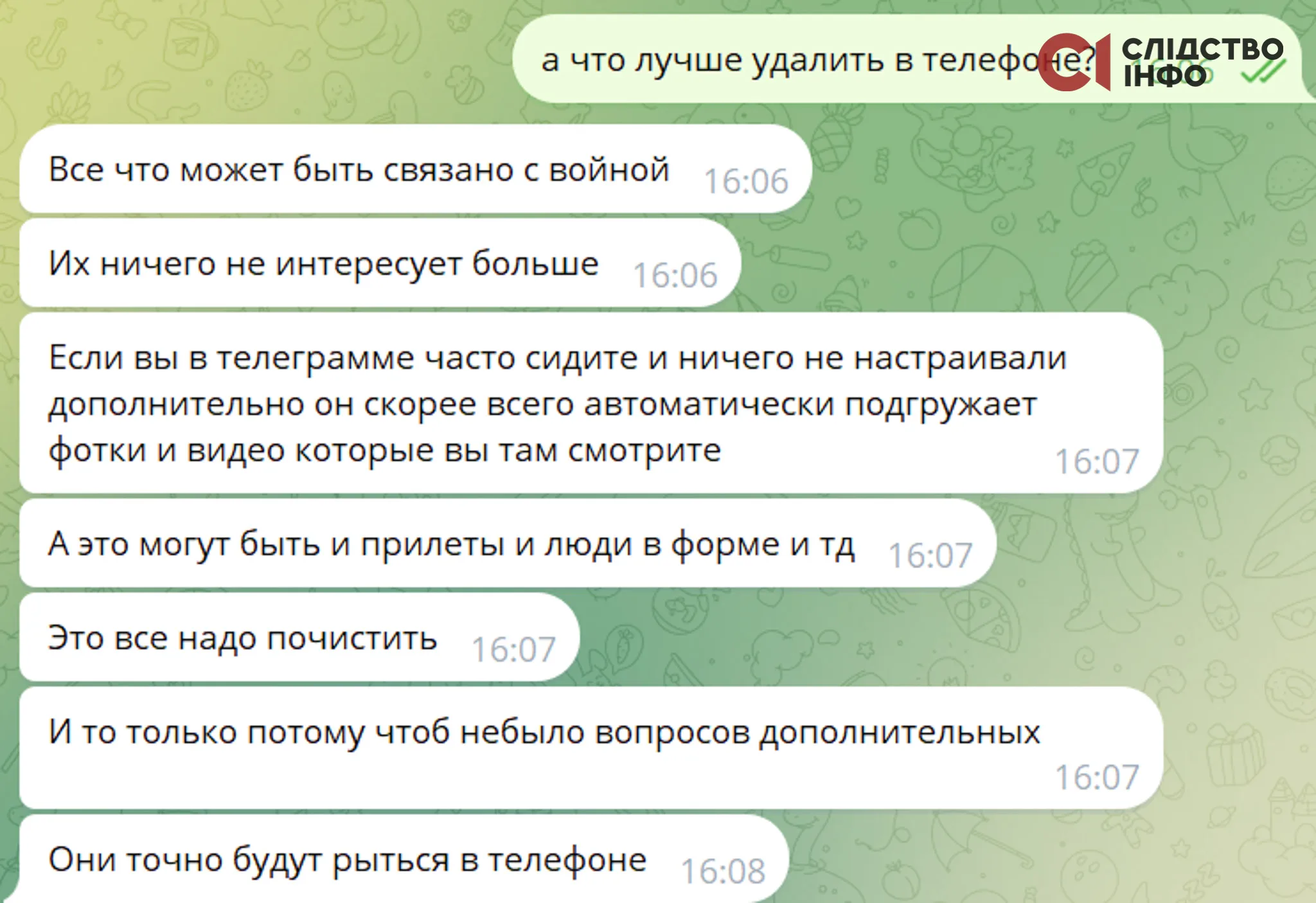
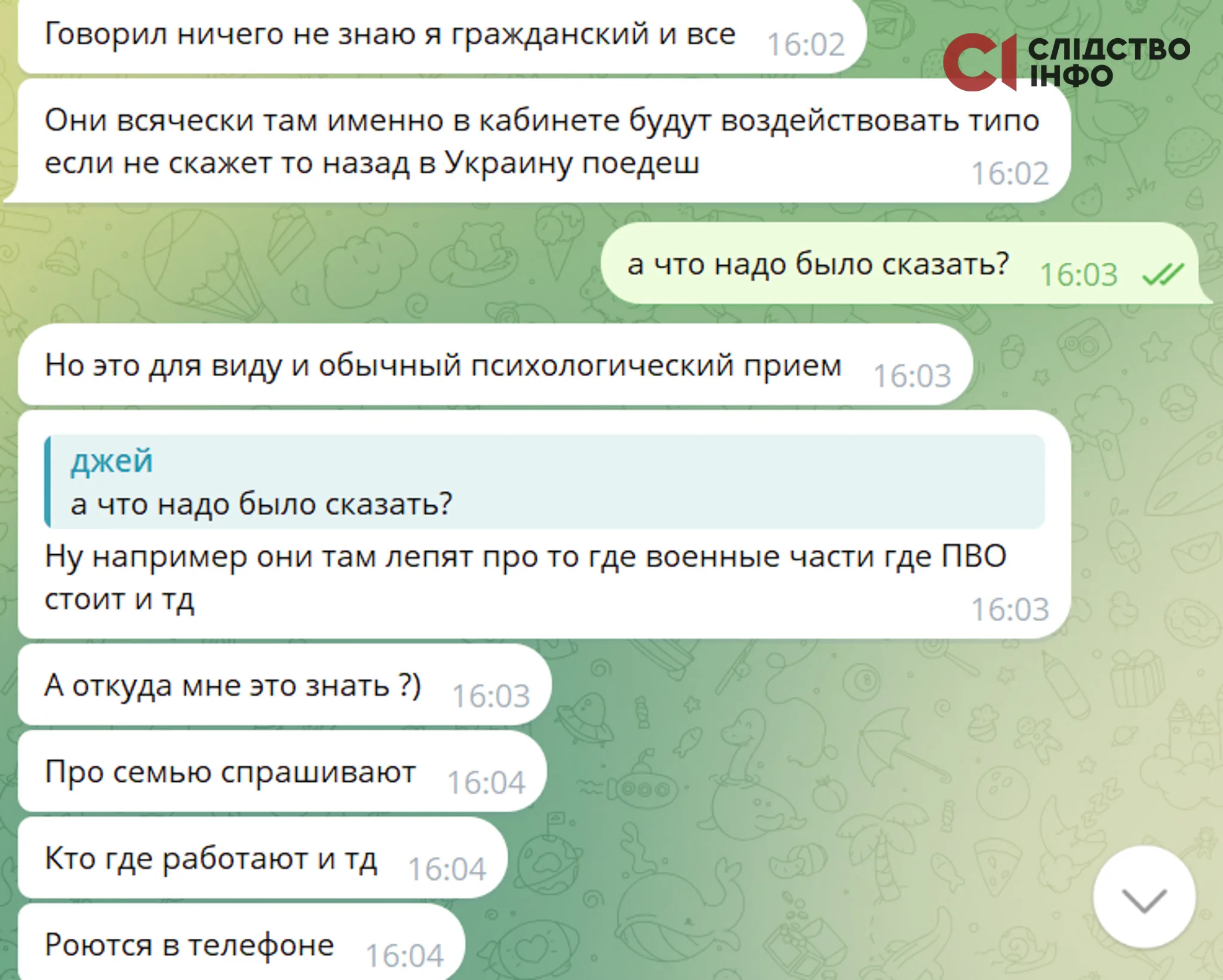
One escapee described intense pressure during the interrogation: “They threaten to send you back to Ukraine if you don’t talk.” Questions focused on locations of military units and air defense systems.
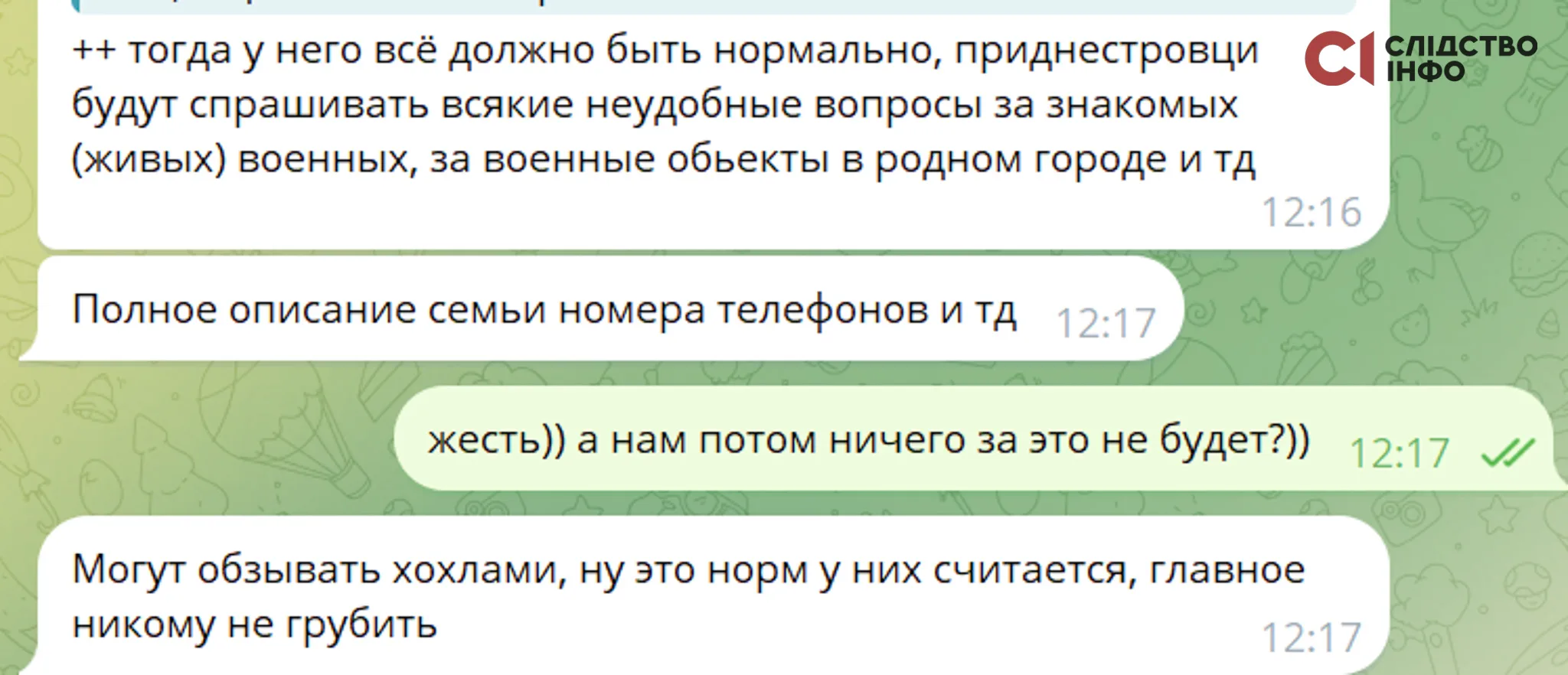
Another recounted being asked about military acquaintances, military facilities in his hometown, full family details, and phone numbers.
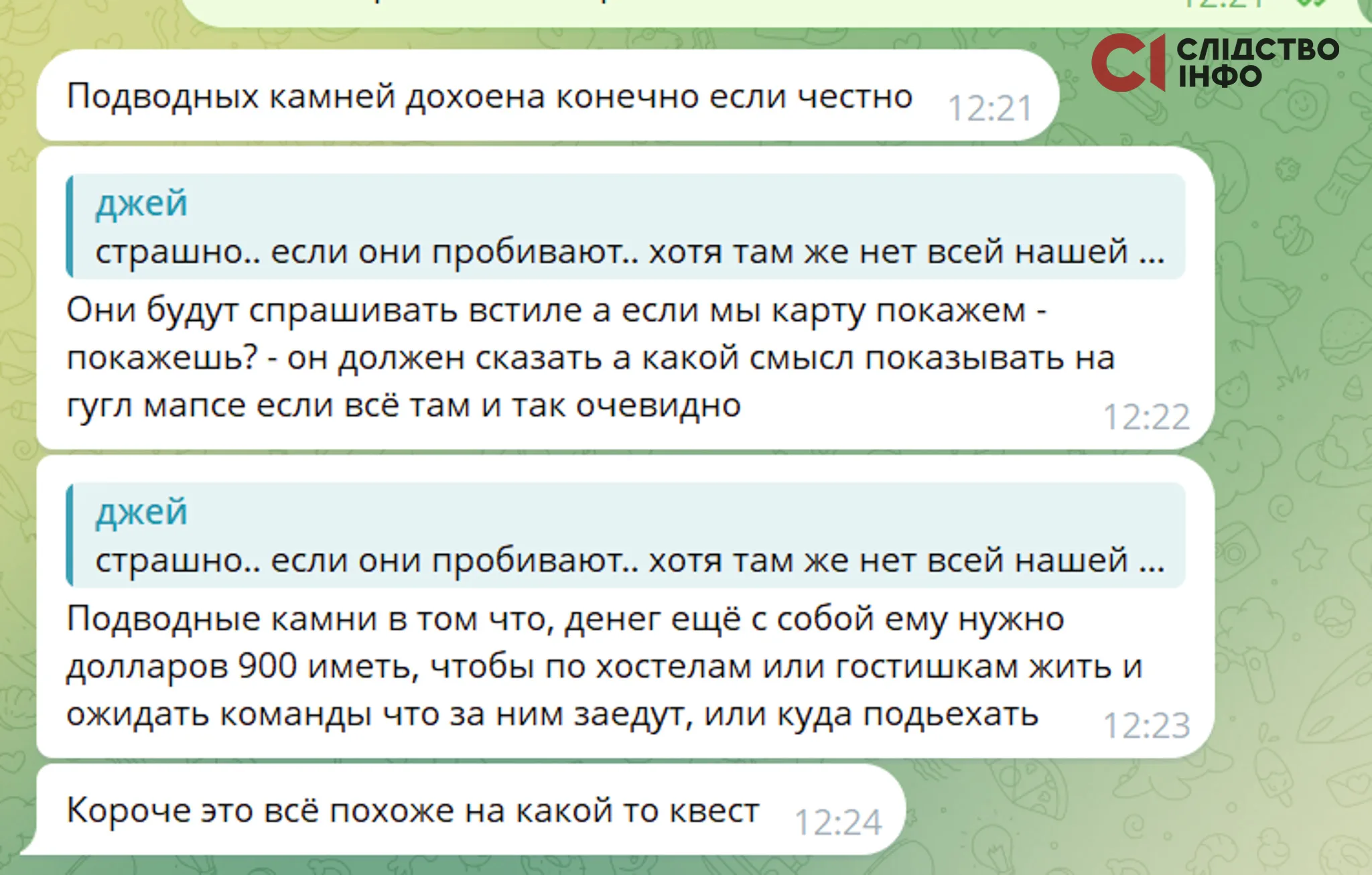
“They can call you ‘khokhol’ (derogatory term for Ukrainians – ed.). Well, it’s okay with them, the main thing is not to be rude to anyone and to lie confidently,” says the fugitive. “They will ask like: ‘If we show you a map, will you show us (military facilities – ed.)?’ The man has to say, ‘What’s the point of showing them on Google Maps if everything is so obvious?’”
Another escapee advised to thoroughly clean the phone of information about friends and relatives from the Ukrainian Armed Forces and everything related to the war, because this is what the so-called MGB officers will be looking for.
The journalist also found a man who had crossed the border into the so-called PMR area on his own, without the services of paid carriers. But on the advice of others, he “surrendered” to local border guards, who took him first to the police and then for questioning.
“I was subjected to harsh interrogations. Most likely, they were FSB officers. The one who interrogated really seemed like one. Because they asked about military equipment. They humiliated me… They could handcuff me, throw me in the basement if they suspected you were lying or something else,” the man said.
He spent several days waiting for the decision of the so-called MGB officers. He was interrogated about military facilities and the situation near the border. He said they were handing over everything to the Russians.
Another fugitive, Dmytro, also went out on his own and “surrendered” to the “Transnistrians”.
“Of course, they were dragging me around hard, morally, just hard. They said: ‘You’ve spilled so much information of all kinds’. I didn’t seem to have told them anything like that. And they said: ‘We’re going to send you to the border now, and your own people will kick you to death’,” the man recalls.
Five of those interviewed by Slidstvo.info believed that their interrogators were Russian FSB officers.
All the men were interrogated according to a standardized scheme: first, they surrendered to the border guards or went straight to the police department. There, they were kept in a cell until it was their turn to go for interrogation with the so-called MGB investigators. Several men were leaving through Rîbniţa, a Transnistrian town near the Ukrainian border. One of them said that at the checkpoint in Rîbniţa there were “two cops from R*shka (a police officer from Russia – ed.)“. According to him, a Russian flag is hanging next to them, they are filling out some documents, and asking the fugitives questions about air defense systems.
A MANDATORY DETOUR FOR INTERROGATION
Slidstvo.Info confirmed that MGB interrogations are mandatory for all men using paid smuggling services through unrecognized Transnistria, part of an agreement between organizers and PMR authorities. Yet, clients are not warned, and if asked, organizers dismiss the process as a formality.

THE “MINISTRY OF STATE SECURITY” SYSTEMATICALLY CONDUCTS OPERATIONS INSIDE UKRAINE IN RUSSIA’S INTERESTS
The interrogation of the men was not the first attempt to gather information about Ukraine’s military facilities. The so-called MGB of unrecognized Transnistria has systematically tried to conduct operations in Ukraine in favor of Russia.
For example, in 2014, in Odesa Oblast, Ukraine’s SBU Security Service detained a captain of the so-called PMR special service, Sergey Kuzmuk. The spy was trying to set up a channel for the illegal supply of weapons and ammunition from the territory of unrecognized Transnistria to Ukraine in order to destabilize the situation and disrupt the presidential elections in Ukraine.
The so-called Ministry of State Security conducted entire special operations involving agents who worked simultaneously for the MGB of the so-called PMR and the Russian Federal Security Service.
In 2023, the SBU detained a citizen of the so-called PMR, Oleksandr Sukhanov, who also holds a Ukrainian passport. At the time, it was reported that he was acting in the interests of Russian special services.
According to the Security Service of Ukraine, Sukhanov was an active participant in the Anti-Maidan movement in Odesa, took part in the 2014 riots, and was put on the wanted list for that.
In 2019, he was recruited by representatives of the so-called MGB of the PMR. He was instructed and began performing tasks in 2023.
“He received a hostile task to create his own agent network in the south of Ukraine. Among the priority areas of his intelligence and subversive activities was the collection of intelligence on the deployment and movement of the Defense Forces in the frontline areas in southern Ukraine,” the SBU said in a statement.
At the end of 2023, Sukhanov pleaded guilty and was sentenced to 15 years in prison for treason. An appeal is currently pending. Sukhanov himself is being held in a pre-trial detention center in Odesa.
Although a judge from the Odesa Oblast Court of Appeals denied Slidstvo.Info an interview with Oleksandr, it turned out that the imprisoned man had access to a phone. Therefore, the journalists contacted him under a pretext.
Sukhanov wrote that he is waiting for the exchange of prisoners of war between Ukraine and Russia – his name is on the lists, so the appeal is, in his opinion, just a delay.
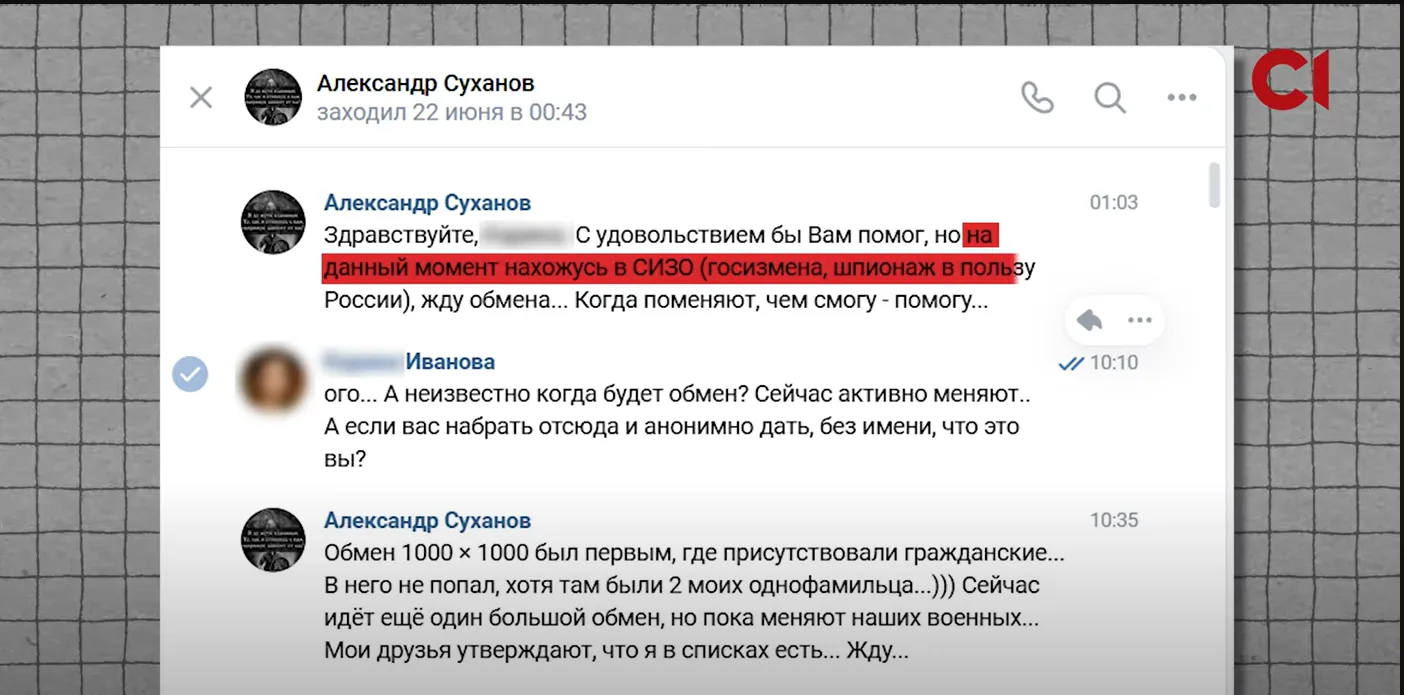
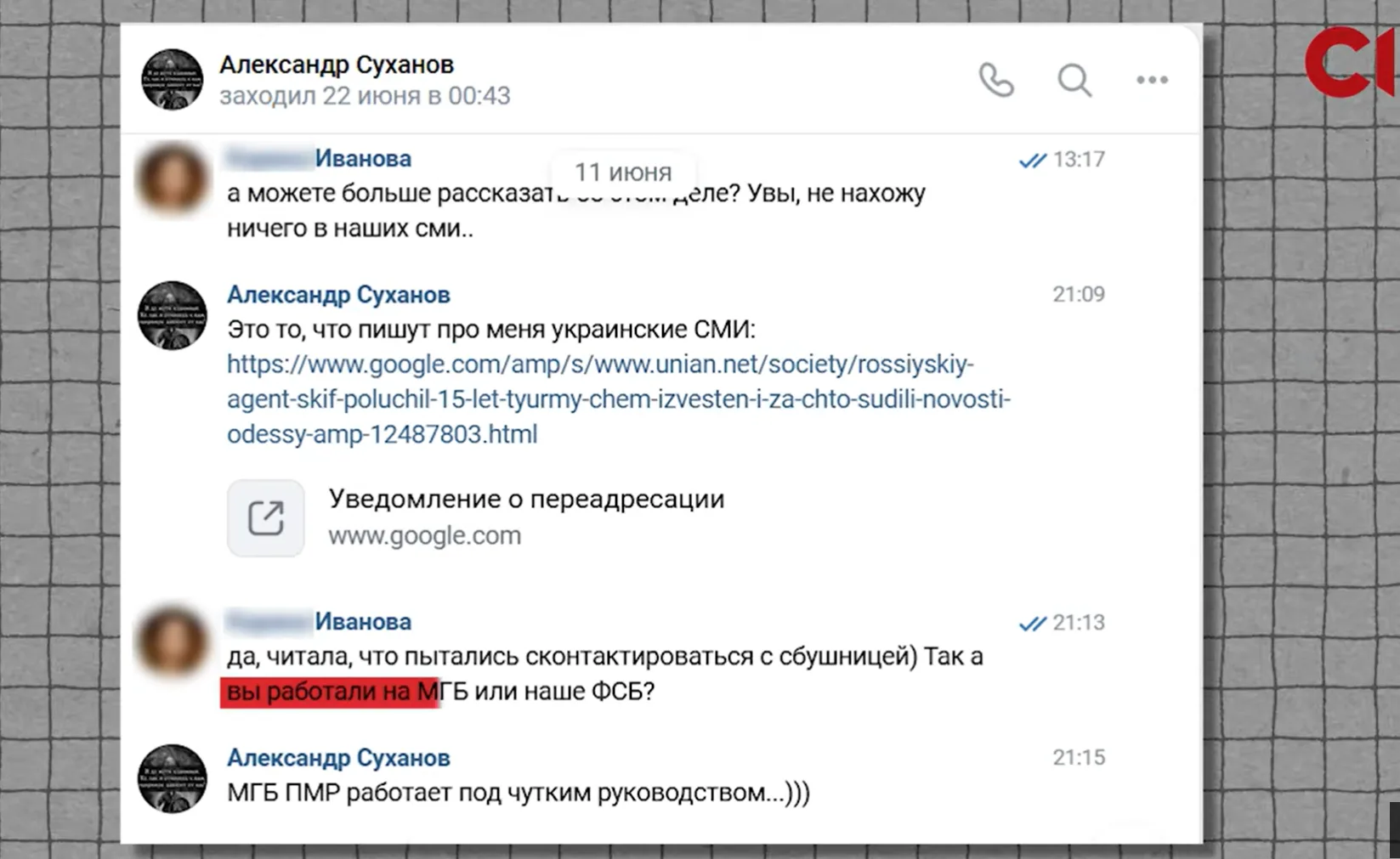
Sukhanov: I am currently in a pre-trial detention center (treason, spying for Russia), waiting for the exchange…
Journalist: So did you work for the MGB or our FSB?
Sukhanov: The MGB of the PMR works under the strict guidance of…
Slidstvo.Info journalists sent a request to the so-called MGB and the Ministry of Foreign Affairs of unrecognized Transnistria to explain the reasons for the interrogation of Ukrainians, but received no response.
This investigation was created within the framework of the Emergency Financial Support Program for Ukrainian independent investigative media outlets with the support of Kyiv Media School, an educational initiative of the Media Development Foundation.